

Forest atlas
Stones and minerals
58 pozycji
Ozdobne
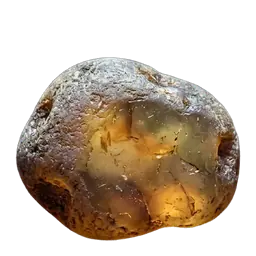
Baltic amberFossil conifer resin about 40 million years old, an organic substance, not a mineral in the strict sense.AmethystA violet variety of quartzGarnet (almandine)An aluminium iron silicate of the garnet group, forming dark red dodecahedral crystals.ChrysopraseAn apple-green variety of chalcedony coloured by nickel.NephriteA compact, fibrous rock made of minerals of the amphibole groupTourmaline (schorl)The black, iron-rich variety of tourmaline, a complex boron silicate.BerylBeryllium aluminium silicateSerpentiniteA metamorphic rock made up of minerals of the serpentine group, formed from former oceanic crust.Smoky quartzA brown to almost black variety of quartzTopazAluminium silicate with fluorine, Al2[SiO4]2Andalusite (chiastolite)Aluminium silicate Al2O[SiO4] from metamorphic rocks
Krzemionkowe
AgateA banded variety of chalcedony, that is microcrystalline silica, filling the vesicles in ancient lavas.Banded flintA siliceous sedimentary rock from the Jurassic, with characteristic bands in shades of grey.Rock crystal and quartzQuartz, the most common mineral of the Earth's crustOpalHydrated, amorphous silicaJasperAn opaque, compact variety of silica strongly coloured by iron oxides.ChalcedonyMicrocrystalline, fibrous silicaChocolate flintFlint from Jurassic deposits, chocolate in colour, from light brown to almost black.Baltic flint (erratic)Flint from the chalk rocks of the Baltic seabed, brought by the ice sheetCarnelianA red, translucent variety of chalcedony, coloured by inclusions of iron oxides and hydroxides.Świeciechów flintGrey flint with white speckles from the Upper Cretaceous limestones around Annopol on the Vistula.Rose quartzA pink variety of quartz, coloured by trace amounts of manganese, iron or titanium.
Kruszce
River goldNative gold in the form of tiny flakes and grains in river sands and gravels.FluoriteCalcium fluoride.MalachiteBasic copper carbonate, a green weathering product of copper ores.AzuriteBasic copper carbonate, the blue 'brother' of malachite.PyriteIron sulphide, known as 'fool's gold'.ChalcopyriteCopper iron sulphide, the most important copper ore in the world.GalenaLead sulphide, the main ore of lead and often of silver.Sphalerite (zinc blende)Zinc sulphide, the main ore of zinc.MarcasiteIron sulphide with a different crystal structure than pyrite.HematiteIron oxide, an iron ore.MagnetiteIron oxide, a natural magnet.SilverNative silver and silver contained in lead and copper ores.BariteBarium sulphate, an exceptionally heavy mineral.Arsenopyrite (mispickel)Iron arsenic sulphide, FeAsSSiderite (spherosiderite)Iron carbonate, FeCO3Bog iron ore (limonite)Precipitates of hydrated iron oxides in the soil of waterlogged depressions, cementing sand and plant remains.
Skamienialosci
Belemnite (thunderbolt)The fossilised internal rostrum of the extinct cephalopod belemnite, built of calciteAmmoniteThe fossilised, spiral shell of an extinct cephalopodFossil sea urchinThe fossilised test of a sea urchin from the CretaceousTrilobiteA fossil of an extinct marine arthropod of the class Trilobita, which lived from the early Cambrian to the end of the…Fossil crinoids (trochites)Fossilised remains of crinoids, marine echinodermsSilicified woodPetrified wood in which the organic matter has been replaced by silica, often with the ring structure preserved.
Meteoryty
Sole skaly
Gypsum and seleniteHydrated calcium sulphateRock saltA rock made up of halite, sodium chloride.SulphurNative sulphur, a yellow element.CalciteCalcium carbonate, the main component of limestones and marbles.MarbleA metamorphic rock formed from recrystallised calcite or dolomite.Strzegom graniteA plutonic igneous rock made of quartz, feldspars and micas.BasaltAn extrusive, fine-grained igneous rockErratic boulderA block of rock carried by the ice sheet from Scandinavia.Writing chalkA soft, white sedimentary rock of calcite, built mainly of microscopic shells of coccoliths and foraminifera.SandstoneA fine-grained sedimentary rock made of sand grains cemented together by a binder.
Check for yourself
- A backyard collection. Collect 10 pebbles from gravel and put a drop of vinegar on each. Limestones and marbles fizz, flints and granites do not; write down how many of each there were.
- A magnet in the sand. Put a magnet in a plastic bag and drag it through dry sand from a beach or a sandpit. The black grains that stick to it are mainly magnetite.
- Granite under a magnifying glass. Look at a granite kerb through a magnifying glass: find the grey, glassy quartz, the white or pink feldspar and the black, shiny mica.
Did you know…
- Skala z 1812 r. The mineral hardness scale from 1 to 10 was introduced in 1812 by Friedrich Mohs. It is still used in the field today. Wikipedia: Mohs scale
- Krzemionki on the UNESCO list. The Neolithic banded flint mines at Krzemionki were inscribed on the UNESCO World Heritage List in 2019. Wikipedia: Krzemionki
- Salt on the UNESCO list. The Wieliczka salt mine was inscribed in 1978 on the very first UNESCO World Heritage List. Among other things, the Chapel of St Kinga was carved there out of salt. Wikipedia: Kopalnia Soli „Wieliczka”