

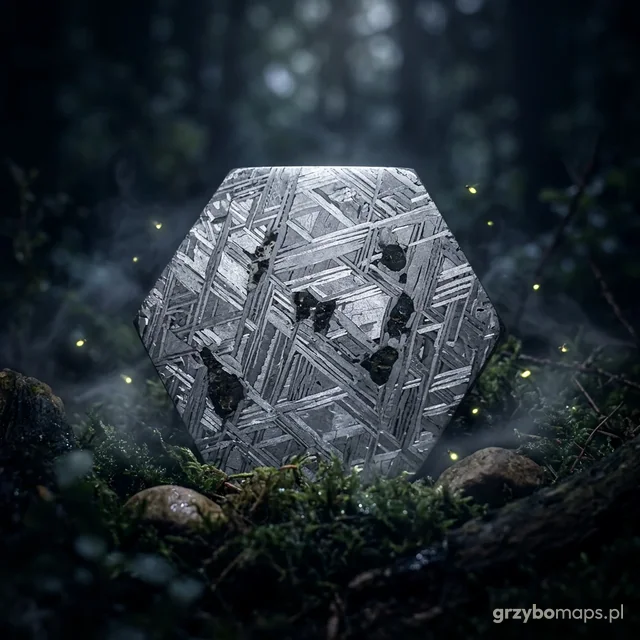
Morasko meteorite
An iron meteorite from a meteorite shower about 5,000 years ago.
A shower of iron meteorites fell on the northern outskirts of Poznań, leaving a group of craters. The largest specimen found weighs 271 kg. The craters are protected by a reserve created in 1976.
What it is
An iron meteorite (iron with nickel, an octahedrite) from a meteorite shower about 5,000 years ago.
How to recognise
- Very heavy, attracts a magnet.
- A rusty brown crust, depressions like fingerprints (regmaglypts).
- On a polished and etched cross-section you can see Widmanstätten figures.
- Smelter slag has bubbles and is lighter; magnetite contains no metallic nickel.
How and where to look
In the reserve you must not search or dig. Outside it, on someone else's field, only with the owner's permission. The law does not directly regulate the ownership of meteorites; when searching with a detector, remember that searching for historical objects requires a permit from the conservator. It is worth reporting a find to scientists, e.g. UAM or the Muzeum Ziemi PAN.
Known places in Poland
- Meteoryt Morasko reserve, Poznań (woj. wielkopolskie): A reserve of about 55 ha: searching and digging are forbidden, you may only view the craters from the path.
Meaning and legends
In many cultures stones from the sky were regarded as a gift or a sign of the gods. Folk 'thunderstones', however, are usually fossils or prehistoric tools, not meteorites.
Fun fact
Specimens from Morasko are among the most numerously found iron meteorites in Europe; databases record more than 1,400 specimens.