

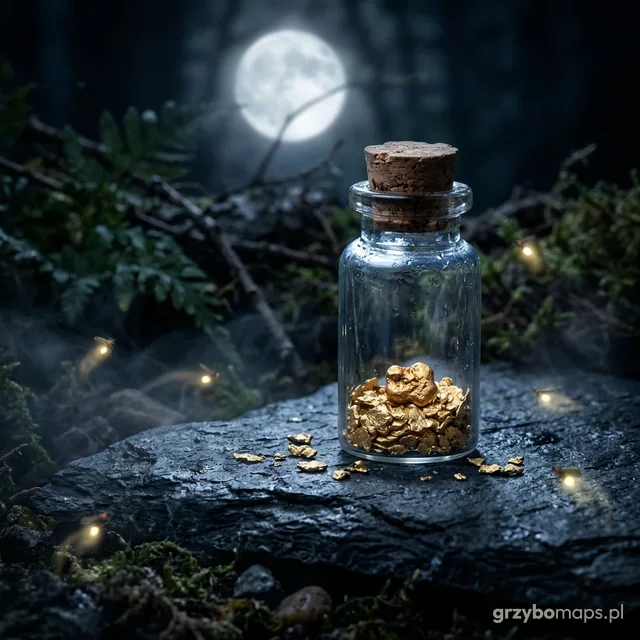
River gold
Native gold in the form of tiny flakes and grains in river sands and gravels.
In the Middle Ages it was washed from the sands of the Kaczawa near Złotoryja. Today only tiny flakes are found, but the tradition lives on in gold-panning competitions.
What it is
Native gold (Au) in the form of tiny flakes and grains in river sands and gravels.
How to recognise
- Very heavy: it stays at the bottom of the pan as the sand washes away.
- Yellow in shade and in sun, it does not flash like a mirror.
- Soft: a needle dents it, it does not crumble.
- Pyrite and mica glitter golden, but pyrite is brittle and mica is light and washes away with the water.
How and where to look
You pan in a pan or bowl in river bends and behind obstacles in the channel, where heavy sand settles. Hobby panning with a bowl is something different from extraction with equipment: working with machines in a river channel requires permits from the water manager (Wody Polskie). The Geological and Mining Law (art. 4) does not cover obtaining specimens of minerals, rocks and fossils for collecting, scientific and educational purposes, if this is done without mining works. In nature reserves and national parks, collecting minerals and fossils is prohibited (Nature Conservation Act, art. 15). On someone else's land, in a forest and in a quarry, you need the permission of the owner, the forest district or the manager.
Known places in Poland
- Złotoryja, the Kaczawa valley (woj. dolnośląskie): The Gold Museum and the Aurelia adit; panning as part of shows and competitions.
- Złoty Stok (woj. dolnośląskie): A former gold and arsenic mine, a tourist route.
Meaning and legends
Złotoryja received town rights in 1211 and ties its name to gold digging. Around the Sudetes circulated 'Walloon books', attributed to wandering prospectors from Wallonia, with descriptions of hidden treasures; that is legend, not geological guidance.
Fun fact
The gold rush on the Kaczawa ended as early as the first half of the 14th century.