

Basalt
An extrusive, fine-grained igneous rock
Lower Silesia and the Opole region have several dozen former volcanoes, tens of millions of years old. Góra Świętej Anny is a relic of a deeply eroded volcano, and Ostrzyca is a basalt cone above the Pogórze Kaczawskie.
What it is
An extrusive, fine-grained igneous rock; in Poland often basanite or nephelinite from young volcanoes.
How to recognise
- Black or dark grey, very fine-grained, heavy.
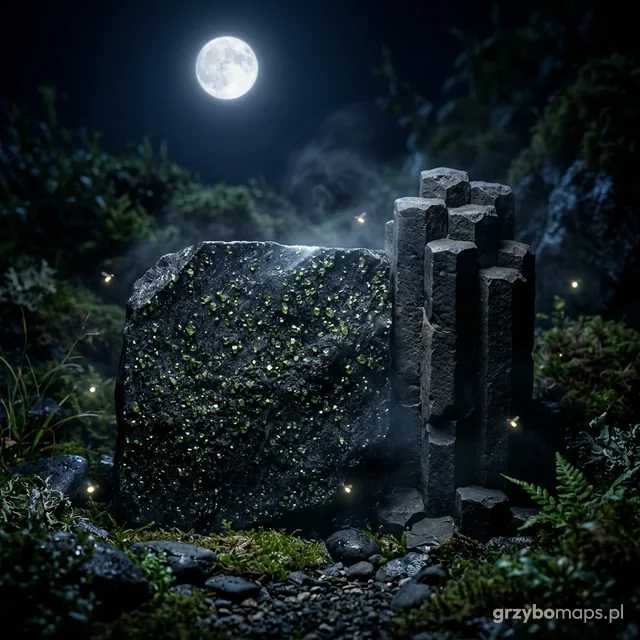
- Often five- and six-sided columns.
- Sometimes green grains of olivine.
- Melaphyre is older and often has vesicles with agates.
How and where to look
Specimens from the dumps of working quarries with permission, not from reserves. Look for olivine grains in the basalt. The Geological and Mining Law (art. 4) does not cover collecting specimens of minerals, rocks and fossils for collecting, scientific and educational purposes, as long as it is done without mining works. Collecting minerals and fossils is prohibited in nature reserves and national parks (Nature Conservation Act, art. 15). On someone else's land, in a forest and in a quarry, you need permission from the owner, the forest district or the manager.
Known places in Poland
- Góra Świętej Anny (woj. opolskie): Geological reserve in a former quarry; look only.
- Ostrzyca (Proboszczowicka) (woj. dolnośląskie): Nature reserve: look at the boulder field only.
Meaning and legends
Góra Świętej Anny is a place of pilgrimage and a Monument of History. In tales, basalt columns were sometimes the 'organs' or buildings of giants; these are legends.
Fun fact
Ostrzyca is called the 'Silesian Fujiyama' because of its regular cone.