

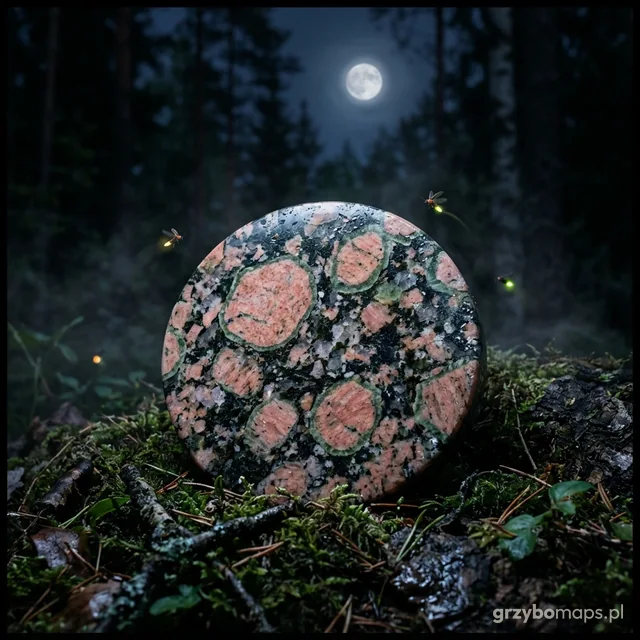
Erratic boulder
A block of rock carried by the ice sheet from Scandinavia.
Erratic boulders lie in fields and forests across northern and central Poland. The largest is Trygław in Tychowo. Many of them are protected as natural monuments.
What it is
A block of rock (most often granite or gneiss) carried by the ice sheet from Scandinavia.
How to recognise
- A rounded, large boulder in an area without solid bedrock.
- Often rapakivi granite from Sweden or Finland.
- Glacial striations on the surface.
- River pebbles are smaller and more smoothed.
How and where to look
Look, but do not knock pieces off natural monuments. Small erratic pebbles can be collected in gravel pits with the owner's permission. The Geological and Mining Law (art. 4) does not cover collecting specimens of minerals, rocks and fossils for collecting, scientific and educational purposes, as long as it is done without mining works. Collecting minerals and fossils is prohibited in nature reserves and national parks (Nature Conservation Act, art. 15). On someone else's land, in a forest and in a quarry, you need permission from the owner, the forest district or the manager.
Known places in Poland
- Trygław, Tychowo (woj. zachodniopomorskie): Natural monument: do not chip off pieces.
Meaning and legends
Trygław is linked with a tale about the pagan deity Trzygłów (Triglav). Many boulders were called 'devil's stones', because people believed the devil carried them to destroy a church; these are legends.
Fun fact
Some boulders can be traced back to specific outcrops in Sweden or Finland.