

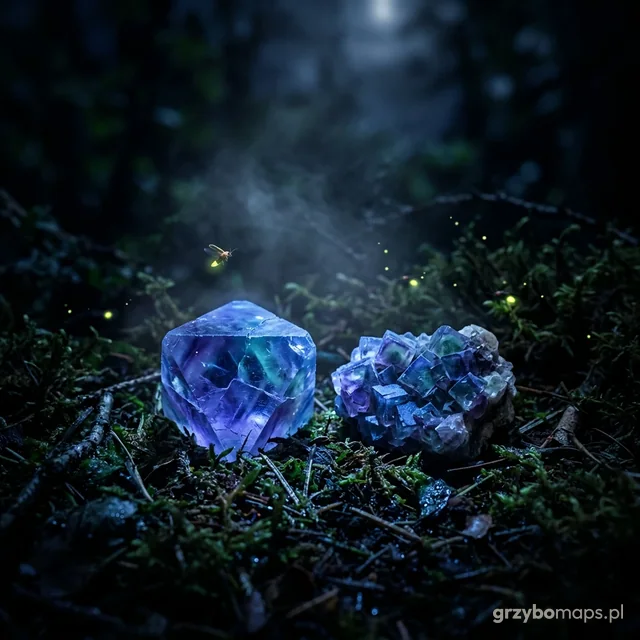
Fluorite
Calcium fluoride.
In Kletno in the Śnieżnik massif, fluorite was mined after uranium mining ended. A dark purple variety, anthozonite, is famous there; its colour comes from the proximity of uranium minerals.
What it is
Calcium fluoride (CaF2).
How to recognise
- Purple, green or colourless, transparent.
- It cleaves into octahedra.
- A knife scratches it; it scratches calcite.
- Amethyst is harder and does not cleave.
How and where to look
On the dumps of former mines in Kletno, outside the Jaskinia Niedźwiedzia reserve. The Geological and Mining Law (art. 4) does not cover collecting specimens of minerals, rocks and fossils for collecting, scientific and educational purposes, as long as it is done without mining works. Collecting minerals and fossils is prohibited in nature reserves and national parks (Nature Conservation Act, art. 15). On someone else's land, in a forest and in a quarry, you need permission from the owner, the forest district or the manager.
Known places in Poland
- Kletno, former uranium mine (woj. dolnośląskie): Tourist route; dumps around it; avoid prolonged contact with anthozonite (trace radioactivity).
Meaning and legends
The phenomenon of fluorescence took its name from fluorite, because it glows under ultraviolet light. Crushed anthozonite smells of fluorine; this is a real chemical effect.
Fun fact
About 60 minerals have been described from Kletno and its surroundings.