

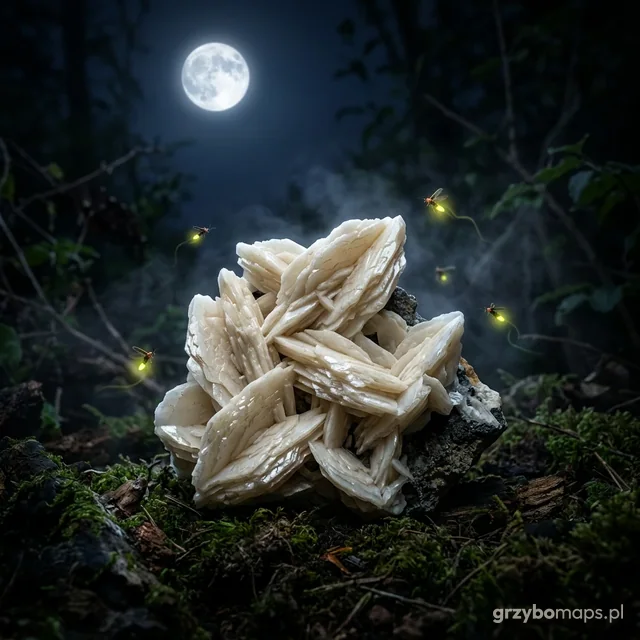
Barite
Barium sulphate, an exceptionally heavy mineral.
Barite occurs in veins in the Sudetes, including the areas of Boguszów-Gorce and Stanisławów in the Kaczawskie Mountains, where mines operated. It often accompanies fluorite.
What it is
Barium sulphate (BaSO4), an exceptionally heavy mineral.
How to recognise
- White, pinkish or cream, tabular crystals.
- Surprisingly heavy for a light-coloured stone.
- Soft, does not fizz in acid.
- Calcite is lighter and fizzes in acid.
How and where to look
On the dumps of former barite and fluorite mines; you can easily recognise it by its weight. The Geological and Mining Law (art. 4) does not cover collecting specimens of minerals, rocks and fossils for collecting, scientific and educational purposes, as long as it is done without mining works. Collecting minerals and fossils is prohibited in nature reserves and national parks (Nature Conservation Act, art. 15). On someone else's land, in a forest and in a quarry, you need permission from the owner, the forest district or the manager.
Known places in Poland
- Boguszów-Gorce (woj. dolnośląskie): Former barite mining; dumps, owner's permission.
- Kletno (woj. dolnośląskie): Barite visible on the route in the mine.
Meaning and legends
The name comes from the Greek barys (heavy). Barite from Bologna glowed after being roasted, which in the 17th century passed for an alchemical miracle.
Fun fact
Barite slurry is used for X-ray examinations of the digestive tract.