

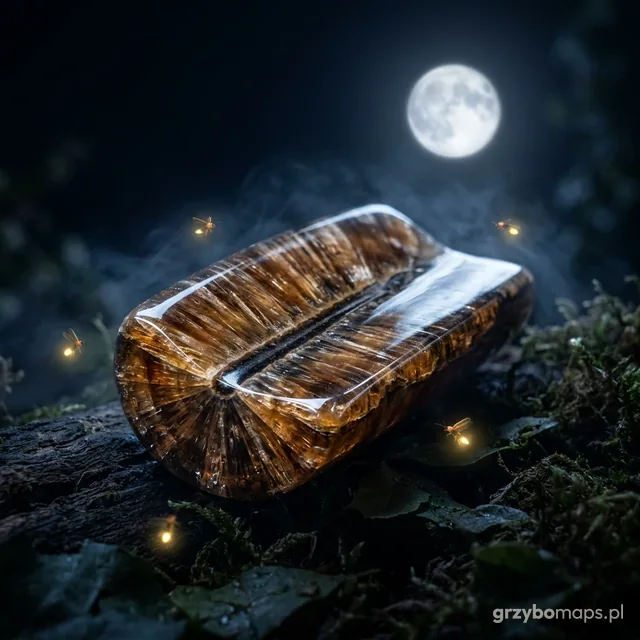
Belemnite (thunderbolt)
The fossilised internal rostrum of the extinct cephalopod belemnite, built of calcite
Bullet-shaped, brownish 'fingers' are the most common fossils in Poland. You will find them in the chalk at Mielnik, in the opoka marls along the Vistula and in glacial gravels in the north.
What it is
The fossilised internal rostrum of the extinct cephalopod belemnite, built of calcite; Jurassic and Cretaceous.
How to recognise
- The shape of a bullet or a cigar, a few to a dozen or so centimetres long.
- Brown, translucent; in cross-section radiating calcite fibres and a small canal in the middle.
- Soft: you can scratch it with a knife, and it fizzes in vinegar.
- Flint fragments are harder and have no radiating structure.
How and where to look
Look on chalk spoil heaps and in glacial gravel pits, and also on beaches. There are no special regulations for belemnites, the general rules apply. The Geological and Mining Law (art. 4) does not cover obtaining specimens of minerals, rocks and fossils for collecting, scientific and educational purposes, if this is done without mining works. In nature reserves and national parks, collecting minerals and fossils is prohibited (Nature Conservation Act, art. 15). On someone else's land, in a forest and in a quarry, you need the permission of the owner, the forest district or the manager.
Known places in Poland
- Mielnik on the Bug, a chalk mine (woj. podlaskie): An active chalk mine, entry with permission; a viewpoint nearby.
- Kazimierz Dolny, ravines and opoka quarries (woj. lubelskie): A landscape park; do not dig in the slopes of the ravines.
Meaning and legends
In Polish folk culture belemnites are 'thunderbolts', 'lightning arrows' or 'God's fingers'. People believed they fall with lightning, bury themselves in the ground and return to the surface after years; they were kept in the house as protection against lightning. That is a belief.
Fun fact
The ethnographer Kazimierz Moszyński described the folk names of belemnites in 'Kultura ludowa Słowian' (Folk Culture of the Slavs).