

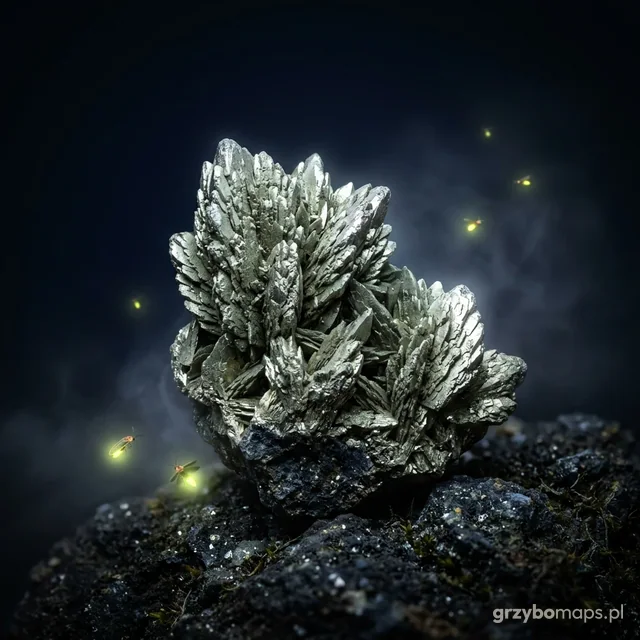
Marcasite
Iron sulphide with a different crystal structure than pyrite.
It forms spherical nodules and cockscomb aggregates in chalk and clays. It is paler than pyrite and decomposes faster.
What it is
Iron sulphide (FeS2) with a different crystal structure than pyrite.
How to recognise
- Pale, greenish-yellow metallic lustre.
- Spherical nodules with a radiating interior or cockscomb crystals.
- It decomposes into a white powder and smells of sulphur.
- Pyrite is more golden and more durable.
How and where to look
In chalk, clays and coals. Keep specimens in a dry container. The Geological and Mining Law (art. 4) does not cover collecting specimens of minerals, rocks and fossils for collecting, scientific and educational purposes, as long as it is done without mining works. Collecting minerals and fossils is prohibited in nature reserves and national parks (Nature Conservation Act, art. 15). On someone else's land, in a forest and in a quarry, you need permission from the owner, the forest district or the manager.
Known places in Poland
- Mielnik, a chalk mine (woj. podlaskie): Iron sulphide nodules in chalk; with the operator's permission.
Meaning and legends
Spherical nodules of marcasite and pyrite were sometimes taken in European folklore for 'thunderstones' or meteorites; this is a mistaken belief.
Fun fact
Marcasite in jewellery is usually cut pyrite.