

Serpentinite
A metamorphic rock made up of minerals of the serpentine group, formed from former oceanic crust.
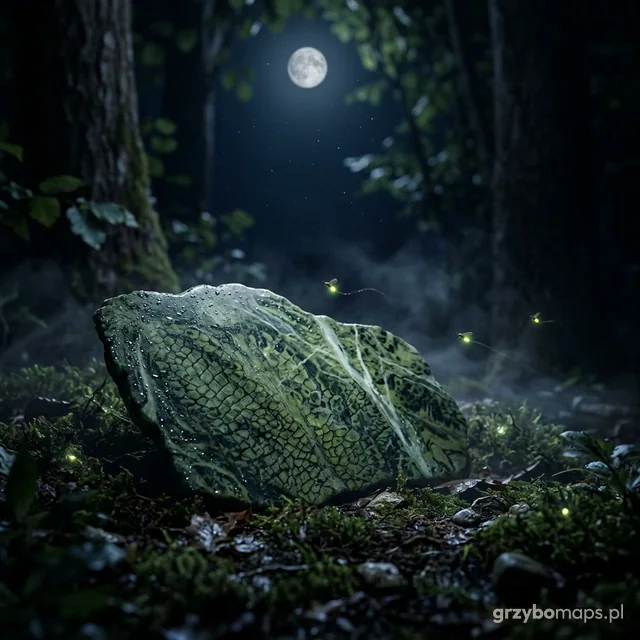
Green, mottled serpentinites form the slopes of Ślęża and the Gogołów-Jordanów massif. Nephrites formed in them, and chrysoprase in Szklary.
What it is
A metamorphic rock made up of minerals of the serpentine group (hydrated magnesium silicates), formed from former oceanic crust.
How to recognise
- Green to black-green, mottled like snakeskin.
- Slippery, greasy to the touch, a knife scratches it.
- Often veinlets of white or green chrysotile asbestos (do not grind it, do not breathe the dust).
- Nephrite is harder and more compact; greenstone is granular.
How and where to look
Boulders on the slopes and in streams below Ślęża, quarry dumps. Collect specimens only outside reserves. The Geological and Mining Law (art. 4) does not cover collecting specimens of minerals, rocks and fossils for collecting, scientific and educational purposes, as long as it is done without mining works. Collecting minerals and fossils is prohibited in nature reserves and national parks (Nature Conservation Act, art. 15). On someone else's land, in a forest and in a quarry, you need permission from the owner, the forest district or the manager.
Known places in Poland
- Ślęża massif (woj. dolnośląskie): Ślęża Landscape Park; take nothing from the summit and the reserves.
- Nasławice (woj. dolnośląskie): Working serpentinite quarry, with permission.
Meaning and legends
Ślęża was a sacred mountain of pre-Christian tribes; mysterious stone sculptures stand on its slopes. The name serpentinite comes from the Latin serpens (snake), because the rock resembles snakeskin; in the past it was believed to protect against snakebite. These are beliefs.
Fun fact
Serpentinites are fragments of former oceanic crust pushed up onto land.