

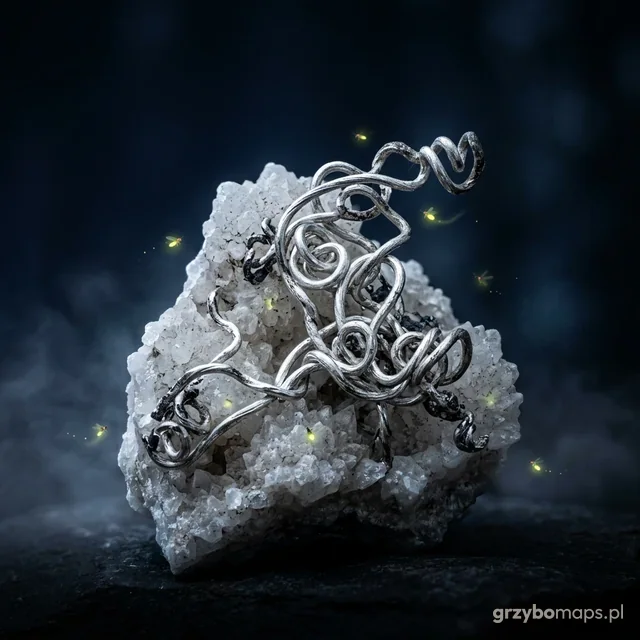
Silver
Native silver and silver contained in lead and copper ores.
Silver from Tarnowskie Góry was smelted from galena from the 15th-16th century. Today Poland is among the largest silver producers thanks to the copper ores of Lubin. You will practically never find native silver in the field.
What it is
Native silver (Ag) and silver contained in lead and copper ores.
How to recognise
- White, metallic, tarnishes black.
- Soft and malleable, wires and thin plates.
- Very heavy.
- Galena is also grey, but it cleaves into cubes and is brittle.
How and where to look
In practice only in museums and collections. The dumps of Tarnowskie Góry yield galena, not native silver. The Geological and Mining Law (art. 4) does not cover collecting specimens of minerals, rocks and fossils for collecting, scientific and educational purposes, as long as it is done without mining works. Collecting minerals and fossils is prohibited in nature reserves and national parks (Nature Conservation Act, art. 15). On someone else's land, in a forest and in a quarry, you need permission from the owner, the forest district or the manager.
Known places in Poland
- Historic Silver Mine, Tarnowskie Góry (woj. śląskie): UNESCO site (2017), underground route with a boat trip.
- Lubin (copper basin) (woj. dolnośląskie): Working KGHM mines, no access for collectors.
Meaning and legends
In Slavic beliefs silver protected against evil powers; this is a belief. Silesian miners told of Skarbek, a spirit guarding the ores.
Fun fact
Poland is among the world's top silver producers, although it has no deposits of silver alone.