

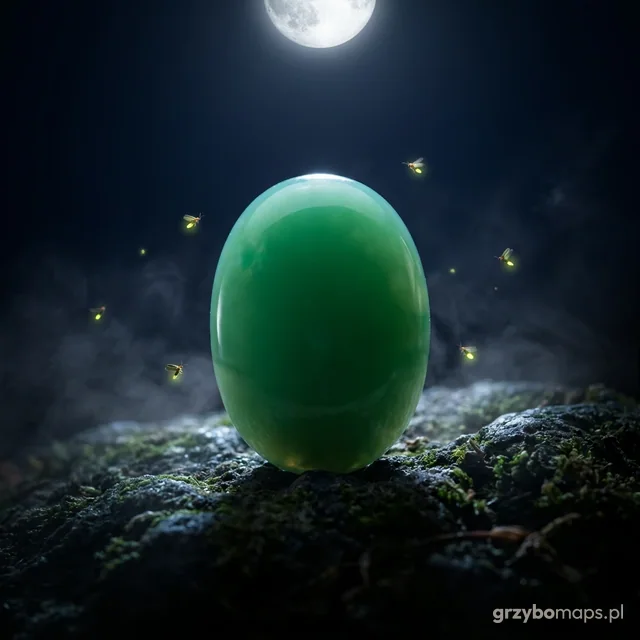
Opal
Hydrated, amorphous silica
At Szklary opal occurs together with chrysoprase and chalcedony, in white, yellowish and green varieties (prase opal). It is common opal, without a rainbow play of colour.
What it is
Hydrated, amorphous silica (SiO2·nH2O); in Poland mainly common opal, without play of colour.
How to recognise
- Waxy or vitreous lustre, milky to translucent.
- Lighter and a little softer than chalcedony.
- Conchoidal fracture, sometimes cracks after drying out.
- Chalcedony is harder and more 'greasy' in lustre; glass is uniform and colder.
How and where to look
Look in veins in weathered serpentinite, on the spoil heaps of Szklary. Do not dry specimens in the sun, because they crack. The Geological and Mining Law (art. 4) does not cover obtaining specimens of minerals, rocks and fossils for collecting, scientific and educational purposes, if this is done without mining works. In nature reserves and national parks, collecting minerals and fossils is prohibited (Nature Conservation Act, art. 15). On someone else's land, in a forest and in a quarry, you need the permission of the owner, the forest district or the manager.
Known places in Poland
- Szklary near Ząbkowice Śląskie (woj. dolnośląskie): Serpentinite weathering products of a former nickel mine; only with the manager's permission.
Meaning and legends
Pliny regarded opal as a stone that combines the colours of all other gems. In the 19th century a superstition circulated that it brings bad luck; that is only a superstition.
Fun fact
Opal has no crystal lattice: it is compacted tiny spheres of silica with water.