

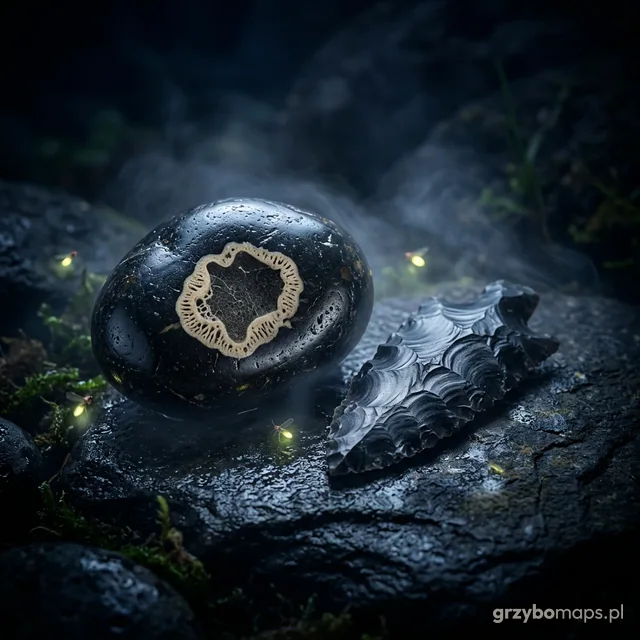
Baltic flint (erratic)
Flint from the chalk rocks of the Baltic seabed, brought by the ice sheet
Grey and black flints lie on the beaches of Pomerania and in gravel pits across northern Poland. They were brought by the ice sheet from Scandinavia and the Baltic seabed. Sometimes they hide casts of sea urchins and sponges inside.
What it is
Flint from the chalk rocks of the Baltic seabed, brought by the ice sheet; microcrystalline silica.
How to recognise
- Grey to black, smooth, with a white or cream crust.
- Very sharp, conchoidal fractures.
- Struck with steel it throws sparks.
- Grey limestones are soft and react with vinegar; flint does not.
How and where to look
On beaches and in glacial gravel pits across northern Poland; in a gravel pit always with the owner's permission. The Geological and Mining Law (art. 4) does not cover obtaining specimens of minerals, rocks and fossils for collecting, scientific and educational purposes, if this is done without mining works. In nature reserves and national parks, collecting minerals and fossils is prohibited (Nature Conservation Act, art. 15). On someone else's land, in a forest and in a quarry, you need the permission of the owner, the forest district or the manager.
Known places in Poland
- Beaches of West Pomerania, e.g. Rewal (woj. zachodniopomorskie): Public beaches; you must not undermine the cliff or the dunes.
Meaning and legends
Tools have been made from flint since the Palaeolithic, and in modern times flints for flintlock weapons. In the east of the Slavic lands a stone with a natural hole was called a 'chicken god' (kurzy bóg) and hung in the henhouse to protect the poultry; that is a folk custom.
Fun fact
Flints formed in the Cretaceous from sponge spicules and the shells of tiny organisms.