

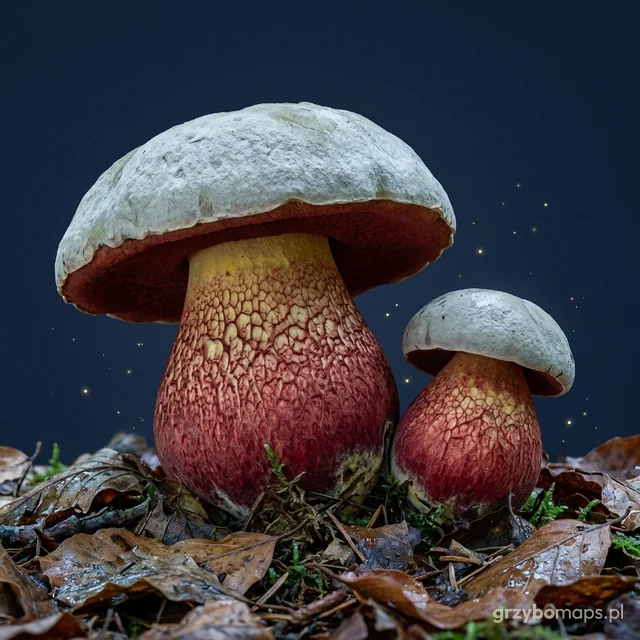
Devil's bolete
Rubroboletus satanas
Strict protection
Polish folk names: borowik szatański, szatan
How to recognise
- Cap grey, with a yellowish or greenish tinge, very large
- Stem yellowish below the cap, carmine-red lower down
- Very rare in Poland
Up close
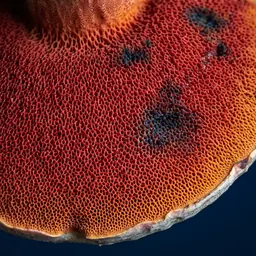 czerwone pory
Underside of the cap
Pores blood-red, orange at the edge; turning blue when pressed.
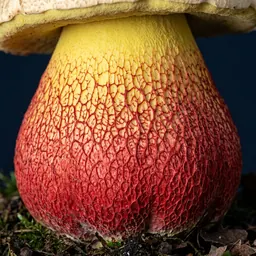 czerwona siateczka
Stem
Stem barrel-shaped, yellow at the top, carmine lower down, with a red net.
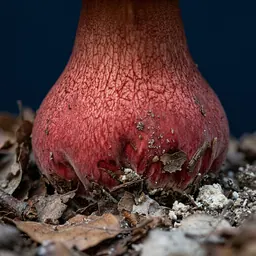 bulwa
Base of the stem
Base strongly bulging, without a volva; grows on calcareous soil under beeches and oaks.
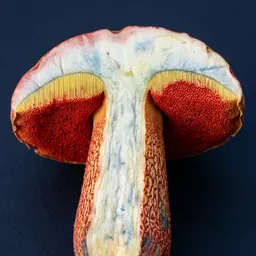 lekko sinieje
Cross-section
Flesh whitish to pale yellow, turns slightly blue when cut; older ones stink of carrion.
The close-ups are AI illustrations. Any doubt is settled by a mycologist or herbalist, not by a photo.
Where and when it grows
Warm deciduous forests, under oaks and beeches, on limestone soils. From July to September.
JanFebMarAprMayJunJulAugSepOctNovDec
Most often under: oak, beech, limestone soils.
Beware of the lookalike
Scarletina bolete. The scarletina bolete has a dark brown cap and grows in ordinary forests. The devil's bolete has a pale grey cap and likes limestone ground.
Feature-by-feature comparison: Scarletina bolete or Devil's bolete?
Feature-by-feature comparison: Lurid bolete or Devil's bolete?
Where in Poland
Most records in the GBIF database: dolnośląskie, śląskie, lubelskie, małopolskie, świętokrzyskie.
Frequently asked questions
Is devil's bolete edible?
Nie. This mushroom is poisonous. Severe gastrointestinal complaints, especially after eating it raw.
When does devil's bolete grow?
July – September. Warm deciduous forests, under oaks and beeches, on limestone soils. From July to September.
Devil's bolete: what is it easily confused with?
Most often with the species Scarletina bolete. The scarletina bolete has a dark brown cap and grows in ordinary forests. The devil's bolete has a pale grey cap and likes limestone ground.
Where in Poland does devil's bolete grow?
Most records (GBIF): dolnośląskie, śląskie, lubelskie, małopolskie, świętokrzyskie. Most often under: oak, beech, limestone soils.