

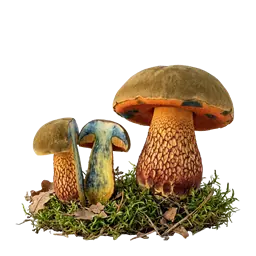
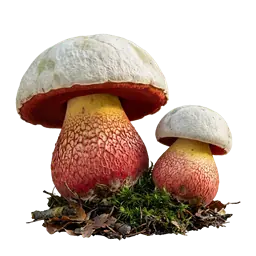
Lurid bolete czy Devil's bolete?
Suillellus luridus · Rubroboletus satanas
Lurid bolete: conditionally edibleDevil's bolete: poisonous
Feature by feature
| Feature | Lurid bolete | Devil's bolete |
|---|---|---|
| Cap | olive brown to ochre | whitish to greyish |
| Stem | with an elongated red net on a yellow-orange background | barrel-shaped, yellow-red, with a fine little net |
| Flesh | yellow, turns dark blue quickly and strongly | whitish, turns slightly blue |
| Smell of older fruiting bodies | grzybowy | padliny |
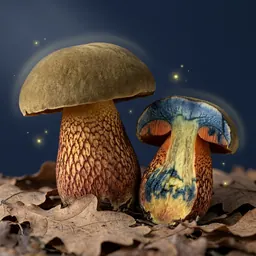 Lurid bolete
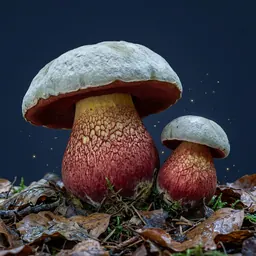 Devil's bolete
Frequently asked questions
How to tell lurid bolete from the species devil's bolete?
Cap: lurid bolete – olive brown to ochre, devil's bolete – whitish to greyish. Stem: lurid bolete – with an elongated red net on a yellow-orange background, devil's bolete – barrel-shaped, yellow-red, with a fine little net. Flesh: lurid bolete – yellow, turns dark blue quickly and strongly, devil's bolete – whitish, turns slightly blue. Smell of older fruiting bodies: lurid bolete – grzybowy, devil's bolete – padliny.
Is devil's bolete poisonous?
Poisonous. Severe gastrointestinal complaints, especially after eating it raw.
What should I do when I am not sure?
Do not pick it and do not eat it. Show the mushroom to the sanitary inspection (Sanepid) or an experienced mycologist. If you suspect poisoning, call 112.