

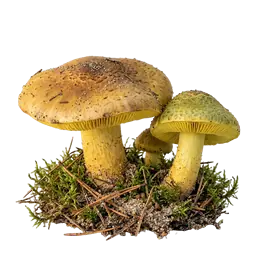
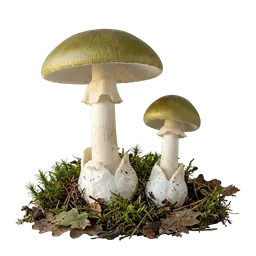
Man on horseback czy Death cap?
Tricholoma equestre · Amanita phalloides
Man on horseback: poisonousDeath cap: deadly poisonous
Feature by feature
| Feature | Man on horseback | Death cap |
|---|---|---|
| Gills | sulphur yellow | white |
| Stem | yellowish, without a ring and without a volva | with a white ring and a sac-like volva at the base |
| Cap | yellow-green, with brownish scales in the centre, often covered in sand | olive green, smooth, silky |
| Place | piaszczyste bory sosnowe | deciduous and mixed forests, under oak and beech |
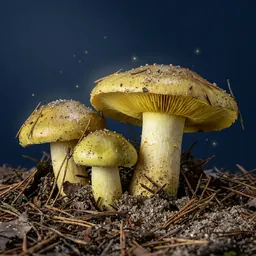 Man on horseback
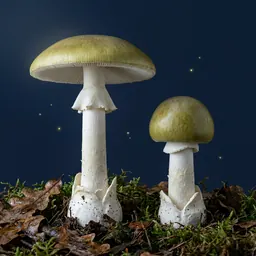 Death cap
Frequently asked questions
How to tell man on horseback from the species death cap?
Gills: man on horseback – sulphur yellow, death cap – white. Stem: man on horseback – yellowish, without a ring and without a volva, death cap – with a white ring and a sac-like volva at the base. Cap: man on horseback – yellow-green, with brownish scales in the centre, often covered in sand, death cap – olive green, smooth, silky. Place: man on horseback – piaszczyste bory sosnowe, death cap – deciduous and mixed forests, under oak and beech.
Is death cap poisonous?
Deadly poisonous. Amatoxins destroy the liver. The first symptoms (vomiting, diarrhoea) appear only after 6–24 hours, then comes an apparent improvement, and the liver and kidney damage shows itself after 2–6 days. The sooner the treatment, the greater the chance.
What should I do when I am not sure?
Do not pick it and do not eat it. Show the mushroom to the sanitary inspection (Sanepid) or an experienced mycologist. If you suspect poisoning, call 112.