

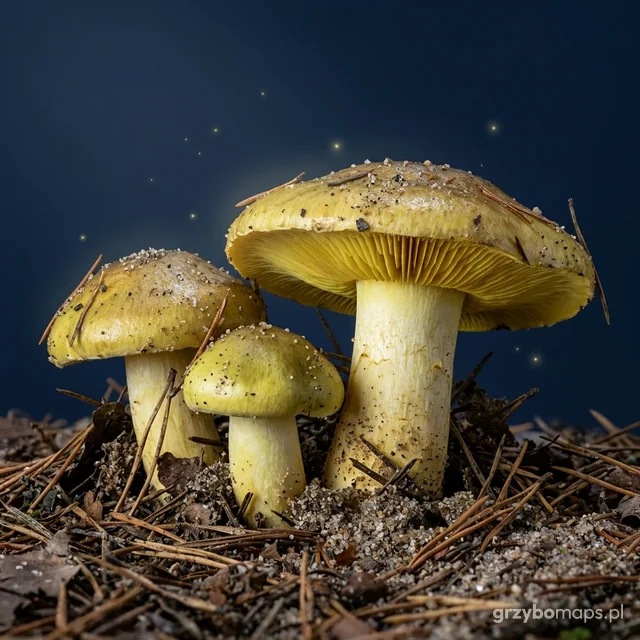
Man on horseback
Tricholoma equestre
Polish folk names: zielonka, gąska zielona, prośnianka, gąska żółta
How to recognise
- Cap 4–10 cm, yellow-green to yellow-brown, darker in the centre, often caked with sand.
- Gills sulphur-yellow, dense.
- Stem yellow, short, often deeply buried in the sand, without a ring.
- Flesh whitish, smell mealy.
Up close
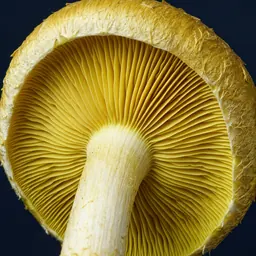 yellow gills
Underside of the cap
Gills sulphur-yellow, dense.
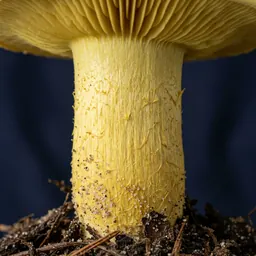 yellow
Stem
Stem yellow, short, without a ring.
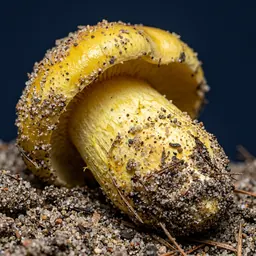 w piasku
Base of the stem
Stem often buried deep in the sand.
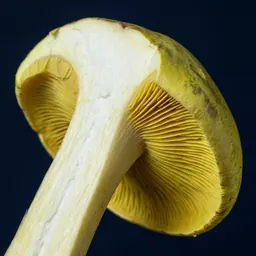 whitish flesh
Cross-section
Flesh whitish, smell mealy. Poisonous mushroom.
The close-ups are AI illustrations. Any doubt is settled by a mycologist or herbalist, not by a photo.
Where and when it grows
Sandy pine forests; from September to late autumn, often only after the first frosts.
JanFebMarAprMayJunJulAugSepOctNovDec
Most often under: sosna.
Beware of the lookalike
Death cap. An amanita has white gills, a ring and a bulb in a sheath at the base. The man on horseback has yellow gills and a yellow stem, with no ring and no sheath.
Feature-by-feature comparison: Man on horseback or Death cap?
Feature-by-feature comparison: Man on horseback or Sulphur knight?
Good to know
A disputed species: in Poland it is traditionally collected and still permitted for sale, but in France and Poland severe, sometimes fatal poisonings (rhabdomyolysis) have been described after eating it several days in a row. Germany and France consider it poisonous. For safety we label it as poisonous and advise against eating it.
Where in Poland
Most records in the GBIF database: lubuskie, pomorskie, kujawsko-pomorskie, łódzkie, mazowieckie.
Frequently asked questions
Is man on horseback edible?
Nie. This mushroom is poisonous. An unknown toxin damaging skeletal muscles and the heart muscle (rhabdomyolysis). Symptoms 24–72 h after repeated meals: fatigue, muscle pain and weakness, dark urine, nausea, sweating; kidney and heart failure possible, deaths have occurred.
When does man on horseback grow?
September – November. Sandy pine forests; from September to late autumn, often only after the first frosts.
Man on horseback: what is it easily confused with?
Most often with the species Death cap. An amanita has white gills, a ring and a bulb in a sheath at the base. The man on horseback has yellow gills and a yellow stem, with no ring and no sheath.
Where in Poland does man on horseback grow?
Most records (GBIF): lubuskie, pomorskie, kujawsko-pomorskie, łódzkie, mazowieckie. Most often under: sosna.