

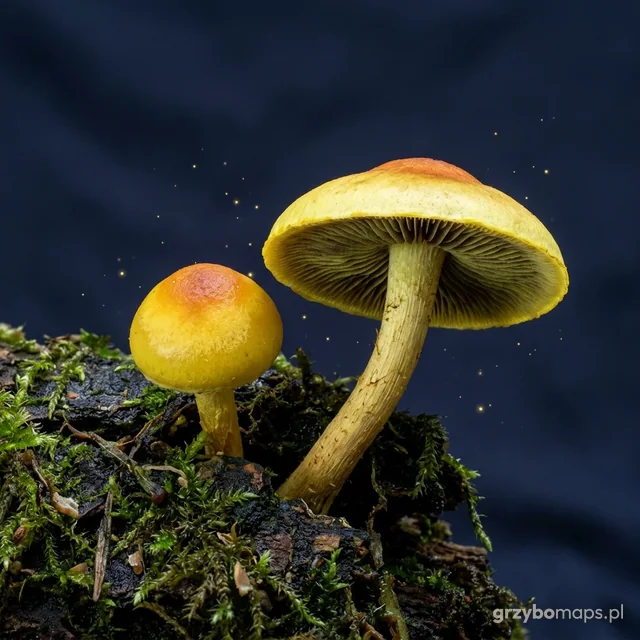
Sulphur tuft
Hypholoma fasciculare
Polish folk names: maślanka
How to recognise
- Clumps of several dozen fruiting bodies on stumps
- Gills sulphur-yellow, then greenish, finally violet-black
- No ring
Up close
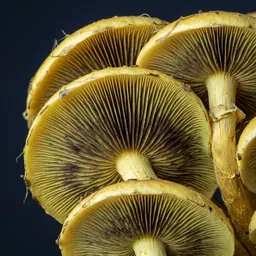 zielonkawe blaszki
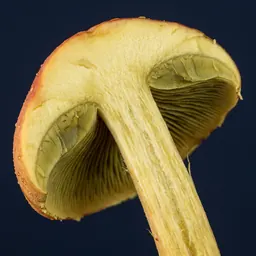
Underside of the cap
Gills sulphur-yellow, then greenish, finally violet-black.
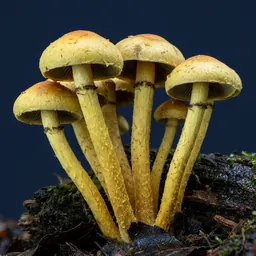 no ring
Stem
Stem yellow, without a membranous ring; at most a dark zone left by the cortina.
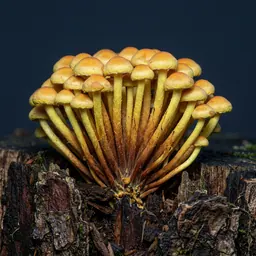 clumps on a stump
Base of the stem
Stems fused into dense clumps on stumps; rusty brown at the bottom.
 yellow, bitter
Cross-section
Flesh sulphur-yellow, very bitter; does not change colour.
The close-ups are AI illustrations. Any doubt is settled by a mycologist or herbalist, not by a photo.
Where and when it grows
Stumps of deciduous and coniferous trees. From April to December.
JanFebMarAprMayJunJulAugSepOctNovDec
Most often under: stumps of broadleaved and coniferous trees.
Beware of the lookalike
Honey fungus. The honey fungus has a ring and pale gills. The sulphur tuft has no ring and its gills are greenish.
Feature-by-feature comparison: Honey fungus or Sulphur tuft?
Where in Poland
Most records in the GBIF database: wielkopolskie, mazowieckie, zachodniopomorskie, pomorskie, łódzkie.
Frequently asked questions
Is sulphur tuft edible?
Nie. This mushroom is poisonous. Poisoning with symptoms from the digestive tract.
When does sulphur tuft grow?
April – December. Stumps of deciduous and coniferous trees. From April to December.
Sulphur tuft: what is it easily confused with?
Most often with the species Honey fungus. The honey fungus has a ring and pale gills. The sulphur tuft has no ring and its gills are greenish.
Where in Poland does sulphur tuft grow?
Most records (GBIF): wielkopolskie, mazowieckie, zachodniopomorskie, pomorskie, łódzkie. Most often under: stumps of broadleaved and coniferous trees.