

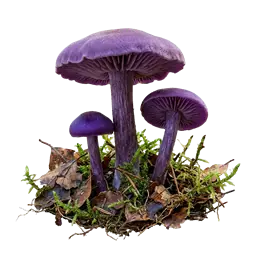
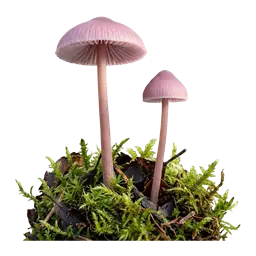
Amethyst deceiver czy Lilac bonnet?
Laccaria amethystina · Mycena pura
Amethyst deceiver: conditionally edibleLilac bonnet: poisonous
Feature by feature
| Feature | Amethyst deceiver | Lilac bonnet |
|---|---|---|
| Gills | thick, sparse, violet | thin, whitish to pale lilac |
| Smell | faint, mushroomy | distinct, of radish |
| Stem | fibrous, tough, stringy | smooth, hollow, brittle |
| Cap | entirely violet, fades after drying | pink-lilac, with a striate edge |
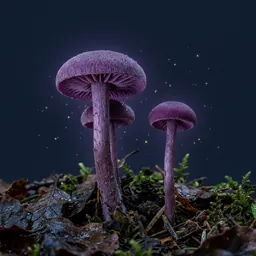 Amethyst deceiver
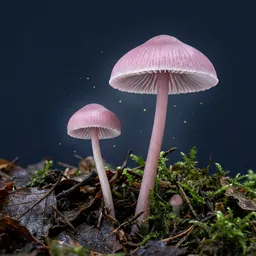 Lilac bonnet
Frequently asked questions
How to tell amethyst deceiver from the species lilac bonnet?
Gills: amethyst deceiver – thick, sparse, violet, lilac bonnet – thin, whitish to pale lilac. Smell: amethyst deceiver – faint, mushroomy, lilac bonnet – distinct, of radish. Stem: amethyst deceiver – fibrous, tough, stringy, lilac bonnet – smooth, hollow, brittle. Cap: amethyst deceiver – entirely violet, fades after drying, lilac bonnet – pink-lilac, with a striate edge.
Is lilac bonnet poisonous?
Poisonous. Muscarine (content variable). Symptoms after 15–30 min: sweating, salivation, tearing, nausea, vomiting, diarrhoea, slowed pulse. Antidote: atropine.
What should I do when I am not sure?
Do not pick it and do not eat it. Show the mushroom to the sanitary inspection (Sanepid) or an experienced mycologist. If you suspect poisoning, call 112.