

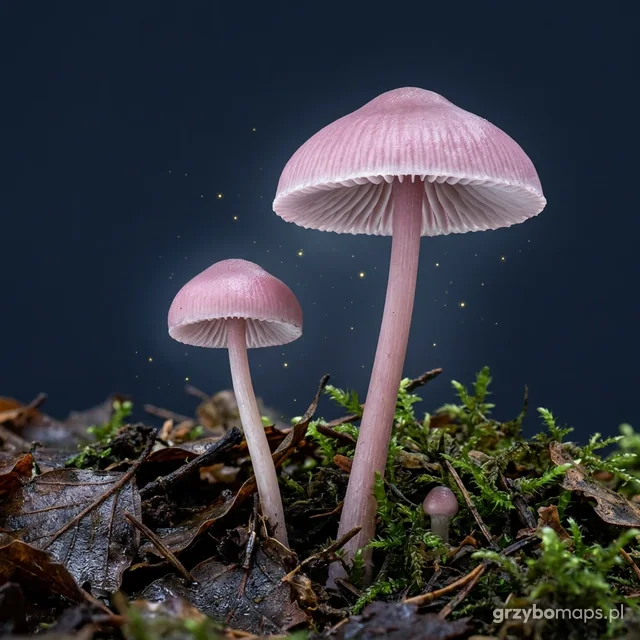
Lilac bonnet
Mycena pura
Polish folk names: grzybówka czysta
How to recognise
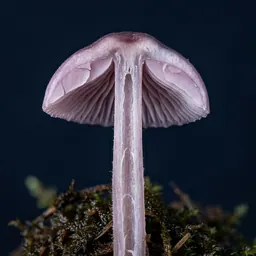
- Cap 2–5 cm, lilac, pink-violet or grey-pink, striate at the edge.
- Gills whitish to pale pink, with cross-veins.
- Stem brittle, hollow, the colour of the cap.
- A distinct smell and taste of radish.
Up close
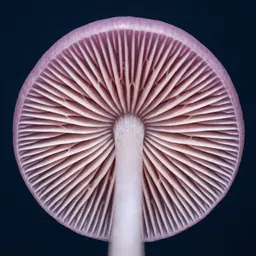 veined gills
Underside of the cap
Gills whitish to pale pink, with cross-veins.
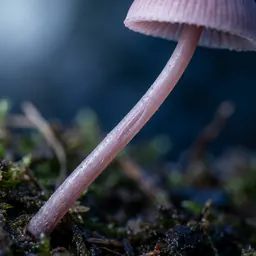 pusty
Stem
Stem brittle, hollow, the colour of the cap.
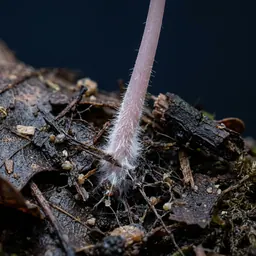 white hairs
Base of the stem
Base with white hairs of mycelium.
 zapach rzodkiewki
Cross-section
Flesh thin, distinct smell of radish.
The close-ups are AI illustrations. Any doubt is settled by a mycologist or herbalist, not by a photo.
Where and when it grows
Very common in the leaf litter of deciduous and coniferous forests; from June to November.
JanFebMarAprMayJunJulAugSepOctNovDec
Most often under: beech, spruce, pine, oak.
Beware of the lookalike
Amethyst deceiver. The deceiver has intensely violet, thick, sparse gills and a fibrous stem, without a radish smell. The lilac bonnet has a paler, striated cap and smells of radish.
Feature-by-feature comparison: Amethyst deceiver or Lilac bonnet?
Good to know
Former Polish name: grzybówka czysta. Easily confused with the more strongly poisonous rosy bonnet.
Where in Poland
Most records in the GBIF database: wielkopolskie, podlaskie, śląskie, małopolskie, zachodniopomorskie.
Frequently asked questions
Is lilac bonnet edible?
Nie. This mushroom is poisonous. Muscarine (content variable). Symptoms after 15–30 min: sweating, salivation, tearing, nausea, vomiting, diarrhoea, slowed pulse. Antidote: atropine.
When does lilac bonnet grow?
June – November. Very common in the leaf litter of deciduous and coniferous forests; from June to November.
Lilac bonnet: what is it easily confused with?
Most often with the species Amethyst deceiver. The deceiver has intensely violet, thick, sparse gills and a fibrous stem, without a radish smell. The lilac bonnet has a paler, striated cap and smells of radish.
Where in Poland does lilac bonnet grow?
Most records (GBIF): wielkopolskie, podlaskie, śląskie, małopolskie, zachodniopomorskie. Most often under: beech, spruce, pine, oak.