

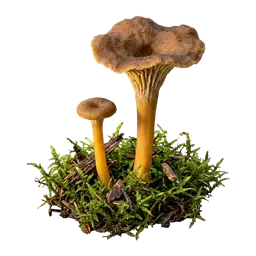
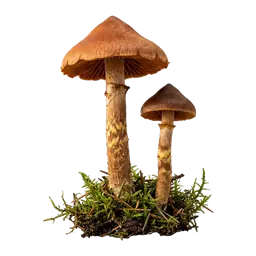
Winter chanterelle czy Deadly webcap?
Craterellus tubaeformis · Cortinarius rubellus
Winter chanterelle: edibleDeadly webcap: deadly poisonous
Feature by feature
| Feature | Winter chanterelle | Deadly webcap |
|---|---|---|
| Underside of the cap | greyish, forked ridges running down the stem | rusty gills, sparse and thick |
| Stem | hollow like a tube, yellow, smooth | solid, with yellowish zigzag bands |
| Cap | funnel-shaped, thin, with a dimple in the middle | conical, with a pointed bump |
| Cap colour | yellow-brown to grey-brown | rusty orange |
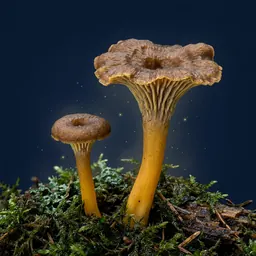 Winter chanterelle
 Deadly webcap
Frequently asked questions
How to tell winter chanterelle from the species deadly webcap?
Underside of the cap: winter chanterelle – greyish, forked ridges running down the stem, deadly webcap – rusty gills, sparse and thick. Stem: winter chanterelle – hollow like a tube, yellow, smooth, deadly webcap – solid, with yellowish zigzag bands. Cap: winter chanterelle – funnel-shaped, thin, with a dimple in the middle, deadly webcap – conical, with a pointed bump. Cap colour: winter chanterelle – yellow-brown to grey-brown, deadly webcap – rusty orange.
Is deadly webcap poisonous?
Deadly poisonous. Orellanine – damages the kidneys. Symptoms appear very late: after 2–20 days (most often 3–14): strong thirst, lower back pain, then acute kidney failure. No antidote, the toxin is not destroyed by cooking; dialysis or a kidney transplant is often necessary.
What should I do when I am not sure?
Do not pick it and do not eat it. Show the mushroom to the sanitary inspection (Sanepid) or an experienced mycologist. If you suspect poisoning, call 112.