

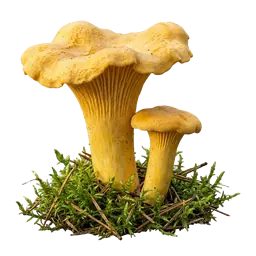
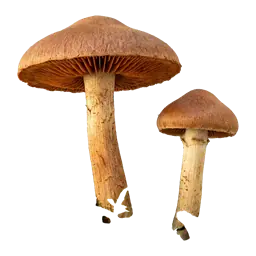
Chanterelle czy Fool's webcap?
Cantharellus cibarius · Cortinarius orellanus
Chanterelle: edibleFool's webcap: deadly poisonous
Feature by feature
| Feature | Chanterelle | Fool's webcap |
|---|---|---|
| Underside of the cap | thick, forked ridges running down the stem | true gills, sparse and wide, rusty orange |
| Colour | entirely egg yellow | rusty orange to reddish brown |
| Flesh | white, fibrous, smells of apricot | yellowish, smells of radish |
| Cap | smooth, with a wavy edge | matt, felty, with a blunt bump |
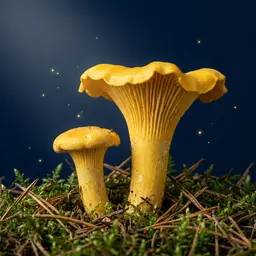 Chanterelle
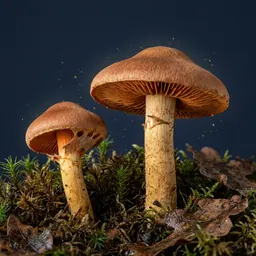 Fool's webcap
Frequently asked questions
How to tell chanterelle from the species fool's webcap?
Underside of the cap: chanterelle – thick, forked ridges running down the stem, fool's webcap – true gills, sparse and wide, rusty orange. Colour: chanterelle – entirely egg yellow, fool's webcap – rusty orange to reddish brown. Flesh: chanterelle – white, fibrous, smells of apricot, fool's webcap – yellowish, smells of radish. Cap: chanterelle – smooth, with a wavy edge, fool's webcap – matt, felty, with a blunt bump.
Is fool's webcap poisonous?
Deadly poisonous. Orellanine destroys the kidneys. The first symptoms appear only after several days (even up to 3 weeks): pain in the lumbar region, nausea, vomiting. Cooking does not remove it. In the 1950s it caused a mass poisoning in Poland.
What should I do when I am not sure?
Do not pick it and do not eat it. Show the mushroom to the sanitary inspection (Sanepid) or an experienced mycologist. If you suspect poisoning, call 112.