

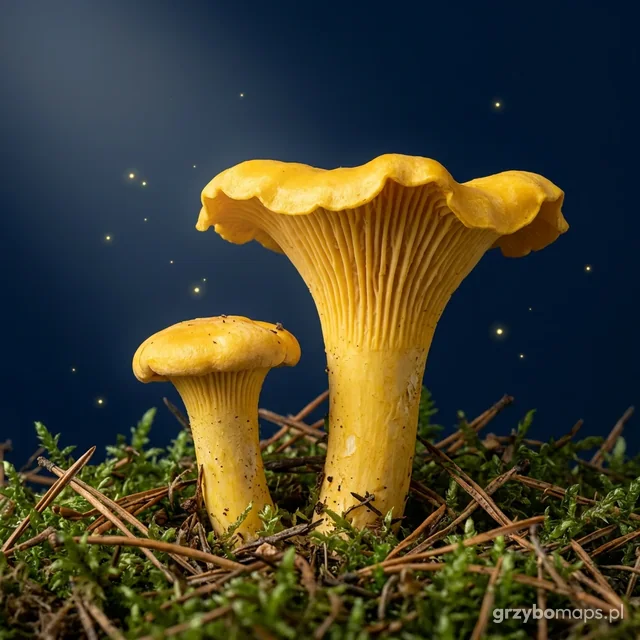
Chanterelle
Cantharellus cibarius
Polish folk names: pieprznik jadalny, kurka, lisica
How to recognise
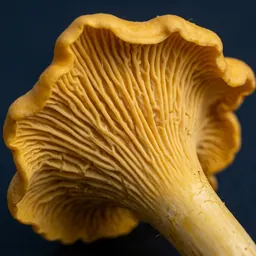
- Under the cap thick, forked ridges, not gills
- Ridges the colour of the cap, running down the stem
- Entirely yellow, like an egg yolk
Up close
 listewki
Underside of the cap
Thick, blunt, forked ridges running down the stem. These are not thin gills.
 solid
Stem
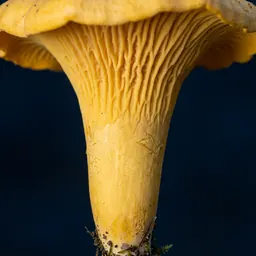
Stem the colour of the cap, solid, tapering downward, merging smoothly into the cap.
 w mchu
Base of the stem
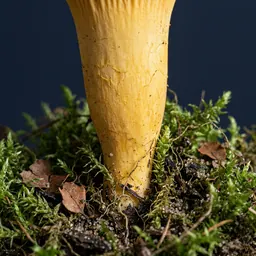
Base narrowed, growing out of soil and moss. No bulb, volva or wood.
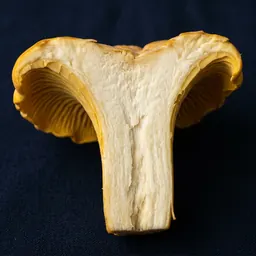 white flesh
Cross-section
Flesh whitish to pale yellow, firm and fibrous, does not change colour.
The close-ups are AI illustrations. Any doubt is settled by a mycologist or herbalist, not by a photo.
Where and when it grows
Coniferous and deciduous forests, often in moss under spruce, on acid, sandy soils. From June to November.
JanFebMarAprMayJunJulAugSepOctNovDec
Most often under: pine, beech, spruce, in moss.
Beware of the lookalike
False chanterelle. It has thin, crowded gills instead of ridges and is more orange than yellow.
Feature-by-feature comparison: Chanterelle or False chanterelle?
Feature-by-feature comparison: Amethyst chanterelle or Chanterelle?
Feature-by-feature comparison: Chanterelle or Fool's webcap?
In the kitchen
Don't dry it, as it turns tough. Best in scrambled eggs or cream sauce. It can be frozen after frying.
Where in Poland
Most records in the GBIF database: pomorskie, wielkopolskie, zachodniopomorskie, mazowieckie, lubelskie.
Recipes with this mushroom
Frequently asked questions
Is chanterelle edible?
Yes, chanterelle is an edible mushroom.
When does chanterelle grow?
June – November. Coniferous and deciduous forests, often in moss under spruce, on acid, sandy soils. From June to November.
Chanterelle: what is it easily confused with?
Most often with the species False chanterelle. It has thin, crowded gills instead of ridges and is more orange than yellow.
Where in Poland does chanterelle grow?
Most records (GBIF): pomorskie, wielkopolskie, zachodniopomorskie, mazowieckie, lubelskie. Most often under: pine, beech, spruce, in moss.