

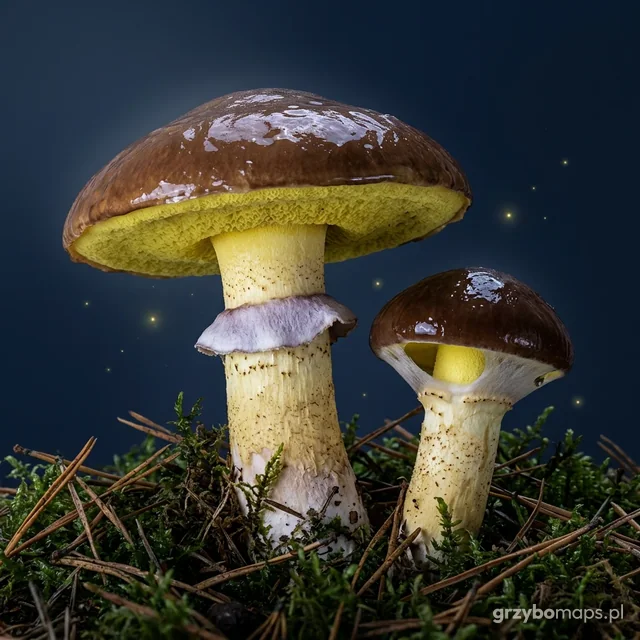
Slippery jack
Suillus luteus
Polish folk names: maślaczek
How to recognise
- Cap chocolate-brown, sticky and shiny
- White-violet ring on the stem
- Tubes lemon-yellow, the skin peels off easily
Up close
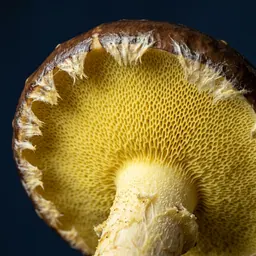 rurki
Underside of the cap
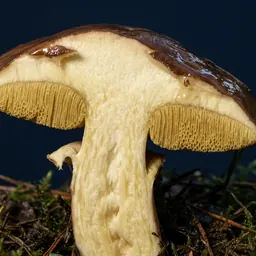
Pores small, lemon yellow; covered with a white membrane in young specimens.
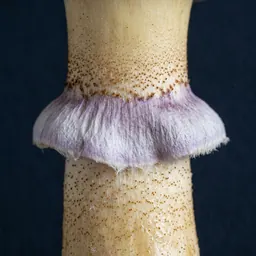 ring
Stem
On the stem a membranous, white-violet ring; above it small granules.
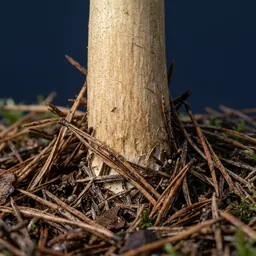 under pine
Base of the stem
Base without a bulb and without a volva; grows under pines.
 does not turn blue
Cross-section
Flesh pale yellow, soft, does not change colour. The slimy skin peels off easily.
The close-ups are AI illustrations. Any doubt is settled by a mycologist or herbalist, not by a photo.
Where and when it grows
Coniferous forests, mainly under pines, often in young plantations. From May to autumn.
JanFebMarAprMayJunJulAugSepOctNovDec
Most often under: pines, often young ones.
Beware of the lookalike
No dangerous ones. Slippery jacks have no poisonous lookalikes. Leave old, soggy ones in the forest.
In the kitchen
Peel off the slimy skin. A classic for pickling in vinegar.
Where in Poland
Most records in the GBIF database: łódzkie, mazowieckie, pomorskie, wielkopolskie, śląskie.
Recipes with this mushroom
Frequently asked questions
Is slippery jack edible?
Yes, slippery jack is an edible mushroom.
When does slippery jack grow?
May – November. Coniferous forests, mainly under pines, often in young plantations. From May to autumn.
Slippery jack: what is it easily confused with?
Most often with the species No dangerous ones. Slippery jacks have no poisonous lookalikes. Leave old, soggy ones in the forest.
Where in Poland does slippery jack grow?
Most records (GBIF): łódzkie, mazowieckie, pomorskie, wielkopolskie, śląskie. Most often under: pines, often young ones.