

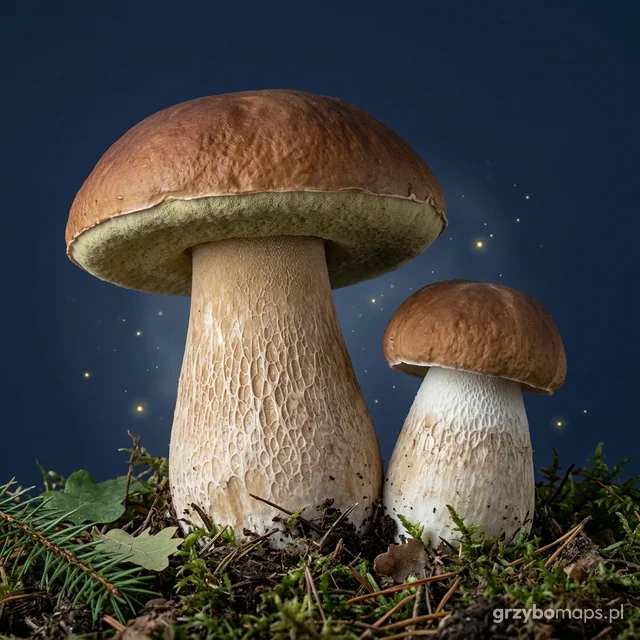
Penny bun
Boletus edulis
Polish folk names: borowik szlachetny, prawdziwek, borowik
How to recognise
- Thick, pale stem with a delicate whitish net, best visible at the top
- Tubes white or cream, olive-yellow in old ones
- Cap brown, smooth
Up close
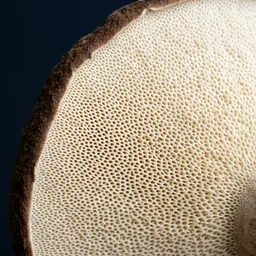 rurki
Underside of the cap
A sponge of fine pores instead of gills: white or cream, yellow-olive in old specimens. Does not turn blue.
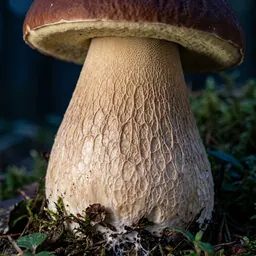 siateczka
Stem
Thick, pale stem with a delicate, whitish net, best visible just below the cap. No ring.
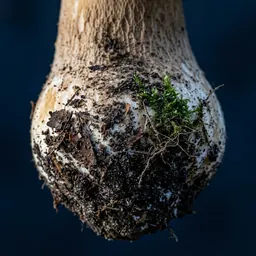 bulwa
Base of the stem
Base thickened, club-shaped, without a volva and without a sac.
 does not turn blue
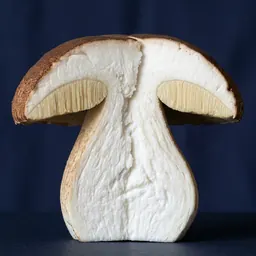
Cross-section
Flesh white, firm, does not change colour when cut. A layer of tubes under the cap, not gills.
The close-ups are AI illustrations. Any doubt is settled by a mycologist or herbalist, not by a photo.
Where and when it grows
Coniferous and deciduous forests. Fruiting bodies most often from May to November.
JanFebMarAprMayJunJulAugSepOctNovDec
Most often under: spruce, beech, pine, oak.
Beware of the lookalike
Bitter bolete. It has a dark net on the stem, and the tubes turn pink with age. It is not poisonous, but a single one will spoil the whole pot with its bitterness.
In the kitchen
Best dried. Slice it and dry at 50°C. Fresh, it is for butter and sauce.
Where in Poland
Most records in the GBIF database: dolnośląskie, wielkopolskie, pomorskie, łódzkie, mazowieckie.
Recipes with this mushroom
Frequently asked questions
Is penny bun edible?
Yes, penny bun is an edible mushroom.
When does penny bun grow?
May – November. Coniferous and deciduous forests. Fruiting bodies most often from May to November.
Penny bun: what is it easily confused with?
Most often with the species Bitter bolete. It has a dark net on the stem, and the tubes turn pink with age. It is not poisonous, but a single one will spoil the whole pot with its bitterness.
Where in Poland does penny bun grow?
Most records (GBIF): dolnośląskie, wielkopolskie, pomorskie, łódzkie, mazowieckie. Most often under: spruce, beech, pine, oak.