

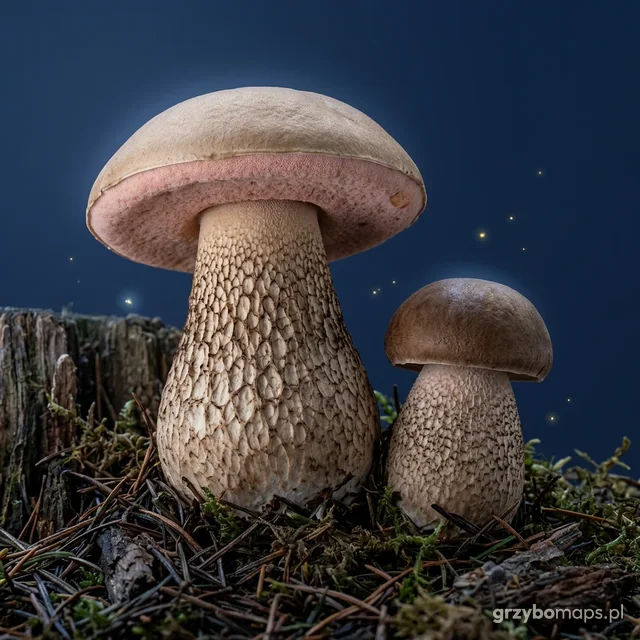
Bitter bolete
Tylopilus felleus
Polish folk names: goryczak, szatan (błędnie)
How to recognise
- Dark, raised net on the stem
- Tubes pink in older specimens
- Flesh turns brown when touched
- Very bitter: spoils the whole dish
Up close
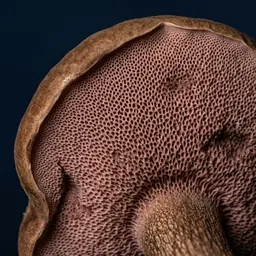 pink tubes
Underside of the cap
Pores whitish, distinctly pink with age – they do not turn yellow as in the penny bun.
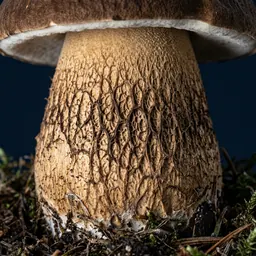 ciemna siateczka
Stem
Stem with a distinct, dark brown, coarse net on a paler background.
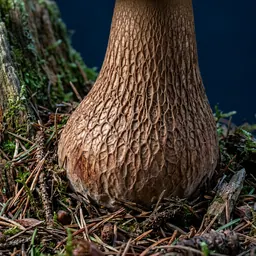 bez pochwy
Base of the stem
Base thickened, without a volva; grows on the ground or on rotting stumps.
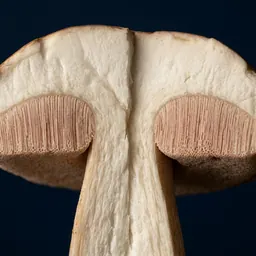 bardzo gorzki
Cross-section
Flesh white, does not turn blue; very bitter – it ruins any dish.
The close-ups are AI illustrations. Any doubt is settled by a mycologist or herbalist, not by a photo.
Where and when it grows
Coniferous forests on acid soils, mainly under pine. From June to the end of October.
JanFebMarAprMayJunJulAugSepOctNovDec
Most often under: pine, coniferous forests on acidic soil.
Beware of the lookalike
Penny bun. The penny bun has a pale, delicate net and white, later olive tubes. The bitter bolete has a dark net and pink tubes.
Feature-by-feature comparison: Penny bun or Bitter bolete?
Feature-by-feature comparison: Brown birch bolete or Bitter bolete?
Where in Poland
Most records in the GBIF database: wielkopolskie, pomorskie, dolnośląskie, mazowieckie, podlaskie.
Frequently asked questions
Is bitter bolete edible?
No, bitter bolete is inedible.
When does bitter bolete grow?
June – October. Coniferous forests on acid soils, mainly under pine. From June to the end of October.
Bitter bolete: what is it easily confused with?
Most often with the species Penny bun. The penny bun has a pale, delicate net and white, later olive tubes. The bitter bolete has a dark net and pink tubes.
Where in Poland does bitter bolete grow?
Most records (GBIF): wielkopolskie, pomorskie, dolnośląskie, mazowieckie, podlaskie. Most often under: pine, coniferous forests on acidic soil.