

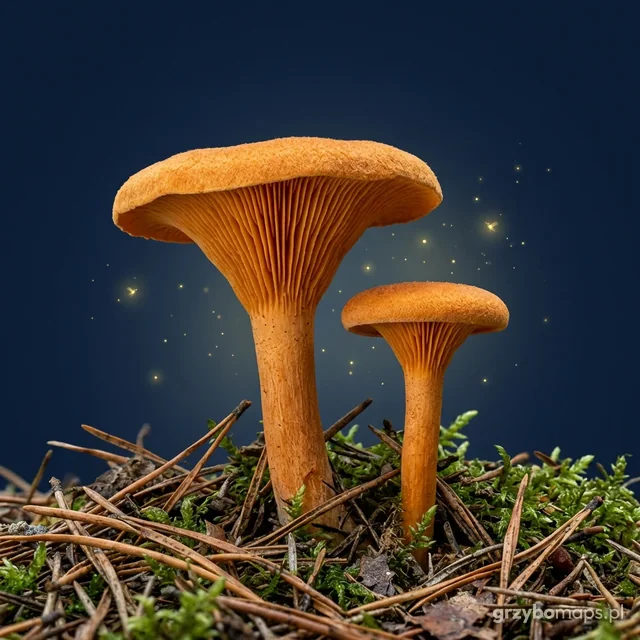
False chanterelle
Hygrophoropsis aurantiaca
Polish folk names: lisówka
How to recognise
- Gills thin, dense, forked, running down the stem
- Colour orange, darker than in the chanterelle
Up close
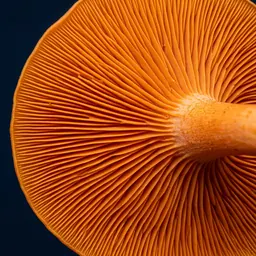 cienkie blaszki
Underside of the cap
True gills: thin, crowded, repeatedly forked – not thick ridges as in the chanterelle.
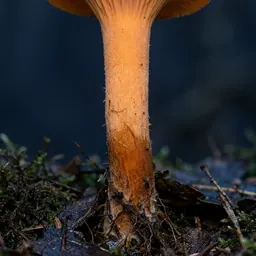 orange
Stem
Stem thin, orange, often darker at the bottom, soft.
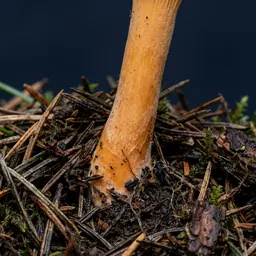 on humus
Base of the stem
Grows on coniferous litter and rotting wood; base without a volva.
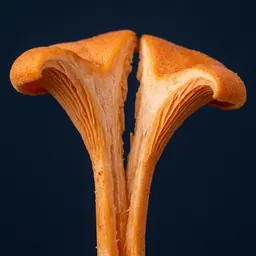 soft flesh
Cross-section
Flesh thin, soft, orangey – not fibrous and white as in the chanterelle.
The close-ups are AI illustrations. Any doubt is settled by a mycologist or herbalist, not by a photo.
Where and when it grows
Coniferous and mixed forests, under pine, fir and beech. From September to November.
JanFebMarAprMayJunJulAugSepOctNovDec
Most often under: pine, fir, beech; coniferous and mixed forests.
Beware of the lookalike
Chanterelle. The chanterelle has thick, blunt ridges and is yellow. The false chanterelle has thin, crowded gills and is orange.
Feature-by-feature comparison: Chanterelle or False chanterelle?
Where in Poland
Most records in the GBIF database: zachodniopomorskie, wielkopolskie, mazowieckie, pomorskie, lubelskie.
Frequently asked questions
Is false chanterelle edible?
No, false chanterelle is inedible.
When does false chanterelle grow?
September – November. Coniferous and mixed forests, under pine, fir and beech. From September to November.
False chanterelle: what is it easily confused with?
Most often with the species Chanterelle. The chanterelle has thick, blunt ridges and is yellow. The false chanterelle has thin, crowded gills and is orange.
Where in Poland does false chanterelle grow?
Most records (GBIF): zachodniopomorskie, wielkopolskie, mazowieckie, pomorskie, lubelskie. Most often under: pine, fir, beech; coniferous and mixed forests.