

Thimble morel
Verpa conica
Polish folk names: naparstniczka
How to recognise
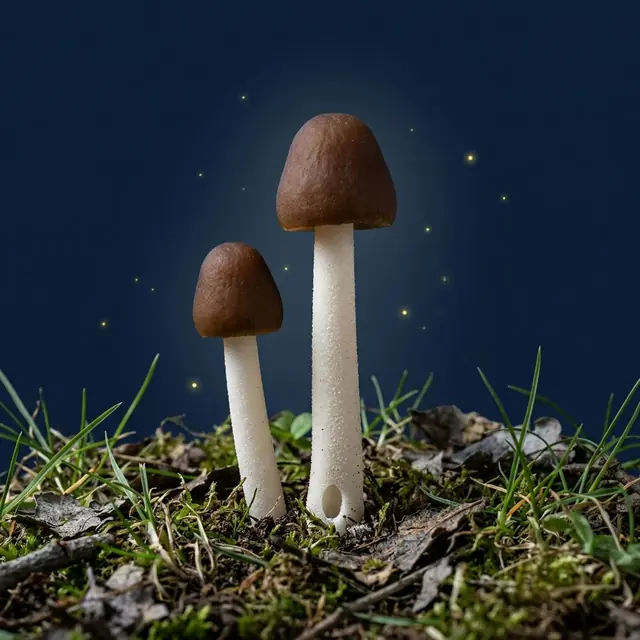
- Cap 1–3 cm, bell-shaped like a thimble, brown, smooth or slightly wrinkled.
- The cap is attached to the stem only at the very top; the edge is free.
- Stem white to cream, hollow inside or cottony, 4–10 cm.
- Grows in early spring, often together with morels.
Where and when it grows
Thickets, riverside woods, parks and forest edges, under hawthorns, ashes and poplars, especially on calcareous soils. In April and May.
JanFebMarAprMayJunJulAugSepOctNovDec
Most often under: thickets, riverside woods and forest edges under hawthorns, ashes and poplars, on calcareous soils.
Beware of the lookalike
Wrinkled thimble-cap. The wrinkled thimble-cap has a cap folded into longitudinal wrinkles. The thimble morel is smaller, and its cap is almost smooth.
Good to know
A protected and rare species in Poland, so it must not be picked. Do not confuse it with the poisonous false morel, which has a folded, brain-like cap.
Frequently asked questions
Is thimble morel edible?
No, thimble morel is inedible. A protected and rare species in Poland, so it must not be picked. Do not confuse it with the poisonous false morel, which has a folded, brain-like cap.
When does thimble morel grow?
April – May. Thickets, riverside woods, parks and forest edges, under hawthorns, ashes and poplars, especially on calcareous soils. In April and May.
Thimble morel: what is it easily confused with?
Most often with the species Wrinkled thimble-cap. The wrinkled thimble-cap has a cap folded into longitudinal wrinkles. The thimble morel is smaller, and its cap is almost smooth.