

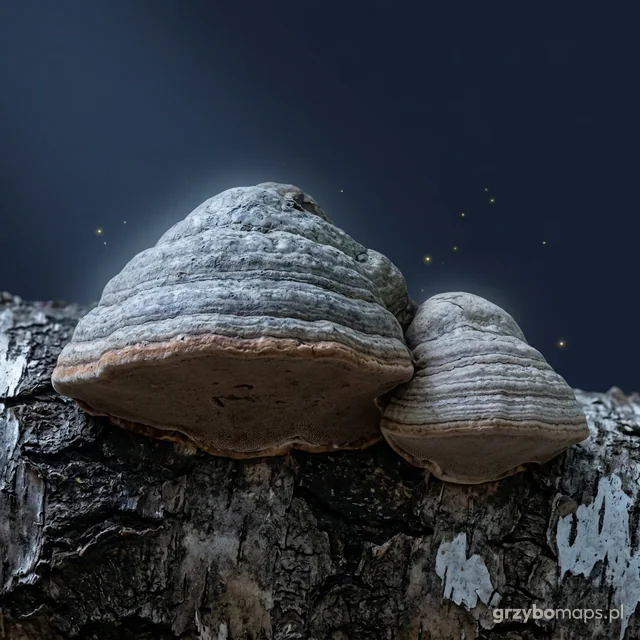
Tinder fungus
Fomes fomentarius
Polish folk names: huba, huba drzewna, hubka, huba prawdziwa
How to recognise
- Fruiting body hoof-shaped, hard as wood, 10–50 cm, attached sideways to the trunk.
- Top grey to grey-brown, with distinct concentric bands of annual growth.
- Underside flat, brown-grey, with tiny pores.
- Perennial – the same fruiting body grows on the tree for many years.
Up close
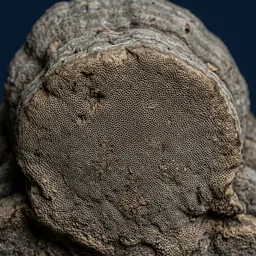 pory
Underside of the fruiting body
Underside flat, brown-grey, with tiny pores.
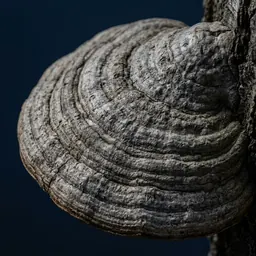 growth bands
Top
Top grey, with concentric bands of annual growth.
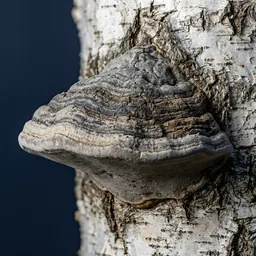 on a stump
Attachment
Attached sideways to the trunk, most often of beech or birch.
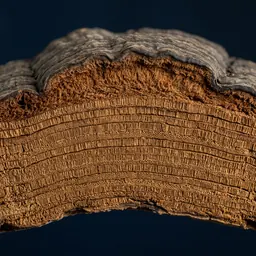 twardy
Cross-section
Flesh wood-hard, cinnamon-brown, layers of tubes.
The close-ups are AI illustrations. Any doubt is settled by a mycologist or herbalist, not by a photo.
Where and when it grows
On trunks of old, weakened and dead beeches and birches, less often other deciduous trees. All year round; very common.
JanFebMarAprMayJunJulAugSepOctNovDec
Most often under: beech, birch, less often other broadleaved trees.
Beware of the lookalike
Red-belted conk. The red-belted conk (Fomitopsis pinicola) has a red-orange margin and also grows on conifers; old grey specimens look very similar. Both are inedible.
Feature-by-feature comparison: Artist's bracket or Tinder fungus?
Feature-by-feature comparison: Birch polypore or Tinder fungus?
Good to know
Inedible – hard as wood. In the past it was used to make tinder for lighting fires.
Where in Poland
Most records in the GBIF database: mazowieckie, pomorskie, małopolskie, podlaskie, łódzkie.
Frequently asked questions
Is tinder fungus edible?
No, tinder fungus is inedible. Inedible – hard as wood. In the past it was used to make tinder for lighting fires.
When does tinder fungus grow?
January – December. On trunks of old, weakened and dead beeches and birches, less often other deciduous trees. All year round; very common.
Tinder fungus: what is it easily confused with?
Most often with the species Red-belted conk. The red-belted conk (Fomitopsis pinicola) has a red-orange margin and also grows on conifers; old grey specimens look very similar. Both are inedible.
Where in Poland does tinder fungus grow?
Most records (GBIF): mazowieckie, pomorskie, małopolskie, podlaskie, łódzkie. Most often under: beech, birch, less often other broadleaved trees.