

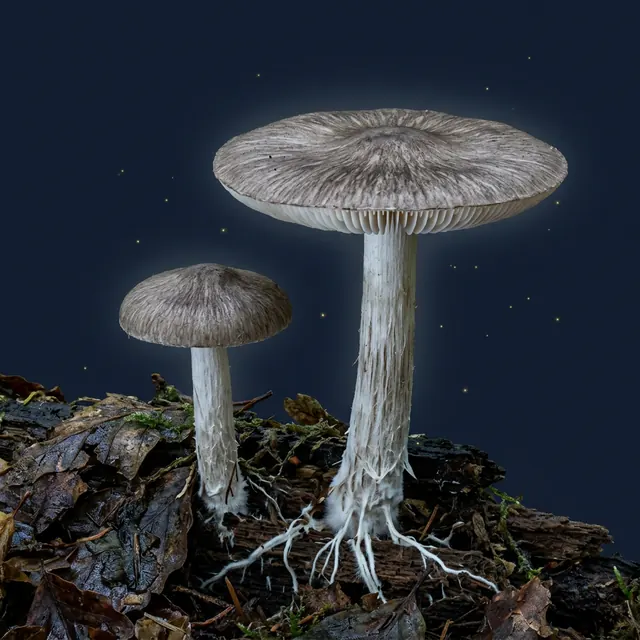
Whitelaced shank
Megacollybia platyphylla
Polish folk names: lejkóweczka szerokoblaszkowa, monetka szerokoblaszkowa, pieniążek szerokoblaszkowy
How to recognise
- Cap 5–15 cm, flat, with distinct radial fibrils, brownish-grey to smoky brown, thin.
- Gills very broad, sparse, sinuate, white to dirty white.
- Stem 6–15 cm, 1–2 cm thick, longitudinally fibrous, whitish to greyish-brown.
- Thick white rhizomorphs (cords of mycelium) at the base, even several metres long.
Up close
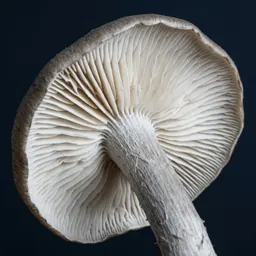 szerokie blaszki
Underside of the cap
Gills very broad and distant, white, sinuate at the stem.
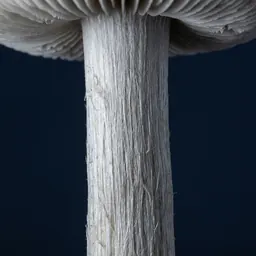 fibrous
Stem
Stem lengthwise fibrous, whitish to greyish-brown, without a ring.
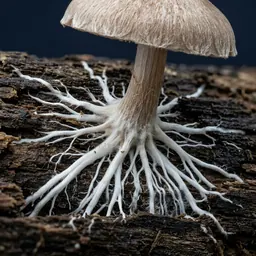 white cords
Base of the stem
Thick, white mycelial cords run from the base to rotting wood.
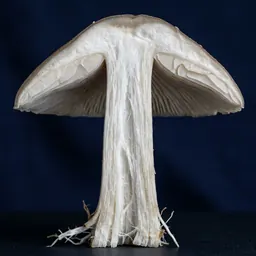 cienki kapelusz
Cross-section
Flesh white, thin, fibrous; the cap is translucent against the light.
The close-ups are AI illustrations. Any doubt is settled by a mycologist or herbalist, not by a photo.
Where and when it grows
Heavily rotten wood, most often beech, also buried in the ground. Forests of various types, more often deciduous. From May to October.
JanFebMarAprMayJunJulAugSepOctNovDec
Most often under: beech and other deciduous trees, less often conifers (rotting wood).
Beware of the lookalike
Deer shield. The deer shield has free gills, more crowded and turning pink with age, and a pink spore print. The whitelaced shank has widely spaced, white gills and white strands at the base.
Good to know
Some atlases list it as edible, others as inedible or poisonous. Eaten in larger amounts it may cause stomach complaints. We do not recommend eating it.
Frequently asked questions
Is whitelaced shank edible?
No, whitelaced shank is inedible. Some atlases list it as edible, others as inedible or poisonous. Eaten in larger amounts it may cause stomach complaints. We do not recommend eating it.
When does whitelaced shank grow?
May – October. Heavily rotten wood, most often beech, also buried in the ground. Forests of various types, more often deciduous. From May to October.
Whitelaced shank: what is it easily confused with?
Most often with the species Deer shield. The deer shield has free gills, more crowded and turning pink with age, and a pink spore print. The whitelaced shank has widely spaced, white gills and white strands at the base.