

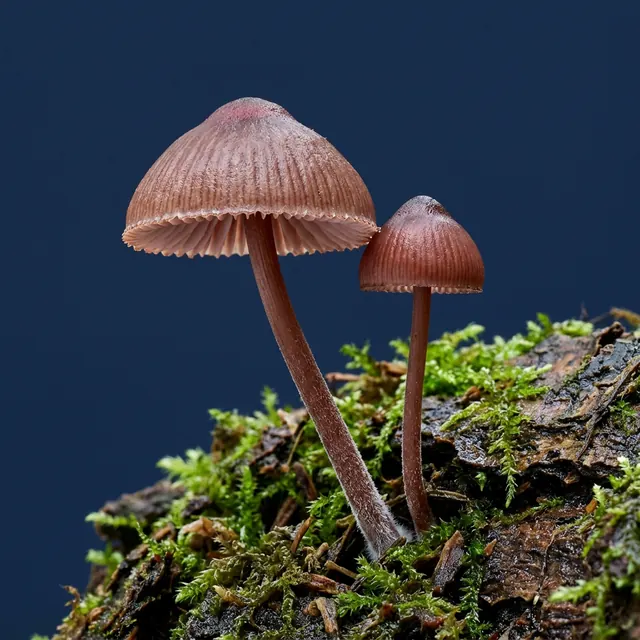
Burgundydrop bonnet
Mycena haematopus
How to recognise
- Cap 1–3 cm, bell-shaped, with an umbo, grooved, wine-brown to pinkish-brown, margin toothed.
- Gills whitish to pink, darker with age.
- Stem 3–7 cm, up to 3.5 mm thick, hollow, frosted, the colour of the cap.
- When damaged, blood-red juice flows out.
Up close
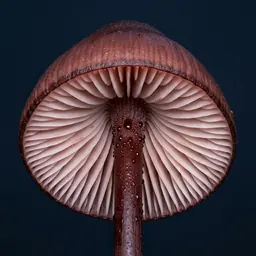 pinkish gills
Underside of the cap
Gills adnate, whitish to pink, darker with age.
 krwisty sok
Stem
Stem thin, hollow, frosted; when broken it exudes blood-red juice.
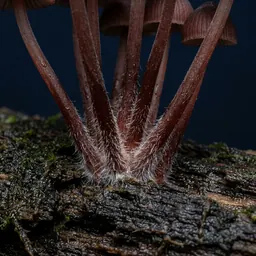 small clump on wood
Base of the stem
Stems gathered in a small clump, with a felty base, on dead wood.
 czerwony sok
Cross-section
Flesh very thin; drops of red juice come out of a cut one.
The close-ups are AI illustrations. Any doubt is settled by a mycologist or herbalist, not by a photo.
Where and when it grows
Dead wood of deciduous trees: trunks, stumps, branches, usually in tufts. From April to October.
JanFebMarAprMayJunJulAugSepOctNovDec
Most often under: dead wood of deciduous trees.
Beware of the lookalike
Bleeding fairy helmet. The bleeding fairy helmet is much smaller and grows on the ground, not on wood.
Good to know
The fruiting bodies and mycelium glow faintly in the dark (bioluminescence).
Frequently asked questions
Is burgundydrop bonnet edible?
No, burgundydrop bonnet is inedible. The fruiting bodies and mycelium glow faintly in the dark (bioluminescence).
When does burgundydrop bonnet grow?
April – October. Dead wood of deciduous trees: trunks, stumps, branches, usually in tufts. From April to October.
Burgundydrop bonnet: what is it easily confused with?
Most often with the species Bleeding fairy helmet. The bleeding fairy helmet is much smaller and grows on the ground, not on wood.