

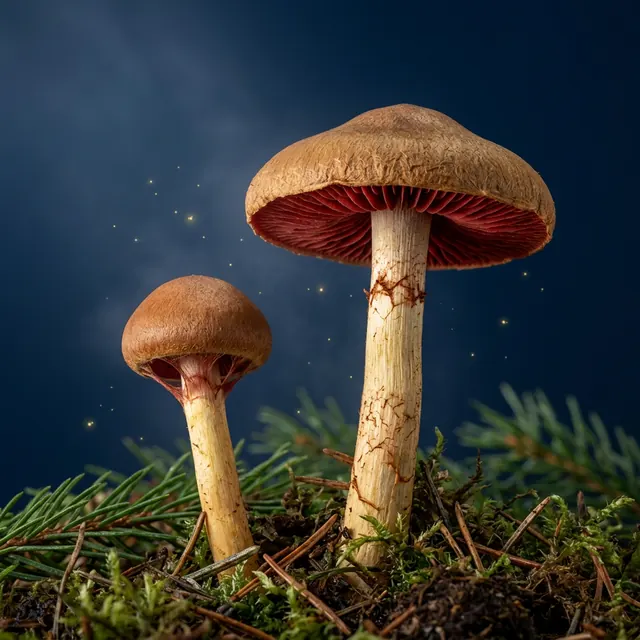
Surprise webcap
Cortinarius semisanguineus
Polish folk names: zasłonak krwistoblaszkowy, skórzak krwistoblaszkowy
How to recognise
- Cap 1–6 cm, cinnamon to olive-brown, convex-flat, often with an umbo.
- Gills crowded, blood-red, then brownish-red.
- Stem 3–7 cm, 4–6 mm thick, yellowish, often reddened at the base.
- Flesh yellowish, smell of radish; spore print rusty-brown.
Up close
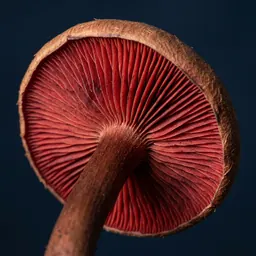 krwiste blaszki
Underside of the cap
Gills crowded, blood-red with paler edges, later brown-red.
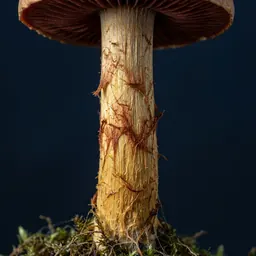 yellowish
Stem
Stem slender, yellowish to yellow-ochre, fibrous, with remnants of the cortina.
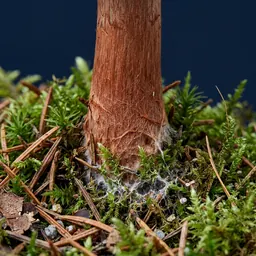 zaczerwieniona
Base of the stem
Base fibrous, often reddish, in moss under spruces.
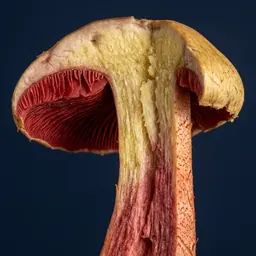 yellowish flesh
Cross-section
Flesh yellowish, reddish at the base, smell of radish. Poisonous mushroom.
The close-ups are AI illustrations. Any doubt is settled by a mycologist or herbalist, not by a photo.
Where and when it grows
Mainly coniferous forests, under spruces and pines, in the lowlands and mountains. From August to October.
JanFebMarAprMayJunJulAugSepOctNovDec
Most often under: spruce, pine; rarely beech, oak, birch.
Beware of the lookalike
Deceiver. The deceiver has widely spaced, flesh-coloured gills, a stem the colour of the cap and a white spore print. The webcap has crowded, blood-red gills and a rusty spore print.
Frequently asked questions
Is surprise webcap edible?
Nie. This mushroom is poisonous. Polish sources report poisonings with orellanine, a toxin that destroys the kidneys. English sources speak of suspected toxins like those of other webcaps of the Dermocybe group.
When does surprise webcap grow?
August – October. Mainly coniferous forests, under spruces and pines, in the lowlands and mountains. From August to October.
Surprise webcap: what is it easily confused with?
Most often with the species Deceiver. The deceiver has widely spaced, flesh-coloured gills, a stem the colour of the cap and a white spore print. The webcap has crowded, blood-red gills and a rusty spore print.