

Deceiver
Laccaria laccata
Polish folk names: bedłka mączasta, serojeszkówka fiołkowa
How to recognise
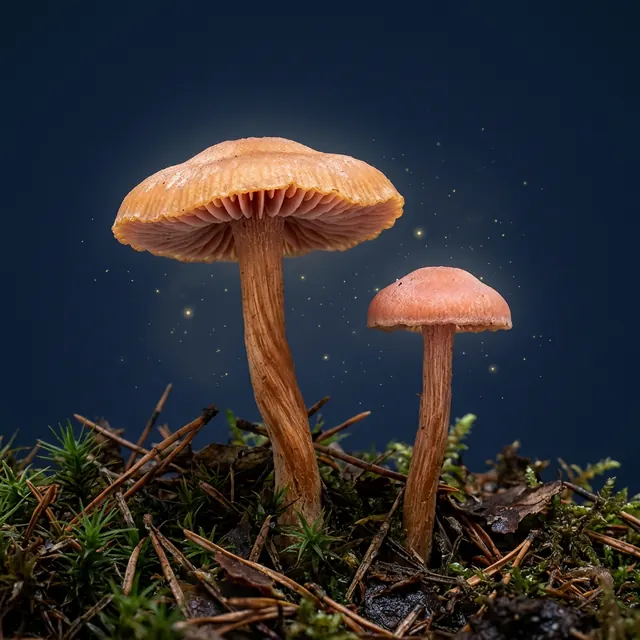
- Cap 1–5 cm, orange, rusty-brown or flesh-pink, hygrophanous, grooved when damp.
- Gills sparse, broad, salmon to brownish-red.
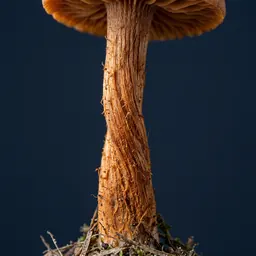
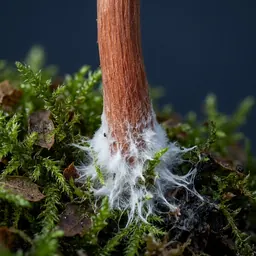
- Stem 2–8 cm, slender, fibrous, often twisted, the colour of the cap, white mycelium at the base.
- Flesh pale reddish, without a distinct smell; spore print white.
Up close
 distant, pink
Underside of the cap
Gills thick, distant, broad, salmon-pink, dusted with white spore print.
 fibrous
Stem
Stem slender, tough, lengthwise fibrous, often twisted, the colour of the cap.
 white mycelium
Base of the stem
Base overgrown with white mycelium.
 thin flesh
Cross-section
Flesh thin, pale reddish, pinker in the stem, odourless.
The close-ups are AI illustrations. Any doubt is settled by a mycologist or herbalist, not by a photo.
Where and when it grows
Various forests, their edges and parks, also grass outside forests; often in masses in forest nurseries. From June to November.
JanFebMarAprMayJunJulAugSepOctNovDec
Most often under: pine, beech, birch and others.
Beware of the lookalike
Surprise webcap. The webcap has crowded, blood-red gills, a yellowish stem and a rusty spore print. The deceiver has widely spaced, flesh-coloured gills and a white spore print.
In the kitchen
Caps only, the stems are fibrous. Add to soups and sauces, cooking for at least 15 min.
Frequently asked questions
Is deceiver edible?
Yes, deceiver is an edible mushroom.
When does deceiver grow?
June – November. Various forests, their edges and parks, also grass outside forests; often in masses in forest nurseries. From June to November.
Deceiver: what is it easily confused with?
Most often with the species Surprise webcap. The webcap has crowded, blood-red gills, a yellowish stem and a rusty spore print. The deceiver has widely spaced, flesh-coloured gills and a white spore print.