


White dunce cap
Conocybe apala
How to recognise
- Cap 1–3 cm, elongated, conical to bell-shaped, cream-white to light beige, very delicate.
- Gills light rusty to cinnamon; spore print rusty brown.
- Stem long (up to about 6–10 cm), thin, white, brittle, hollow.
- Appears on lawns after rain and quickly withers during the day.
Up close
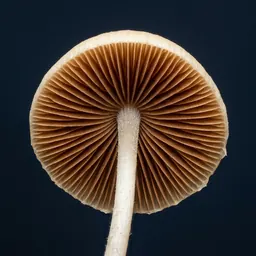 cynamonowe blaszki
Underside of the cap
Gills pale rusty to cinnamon.
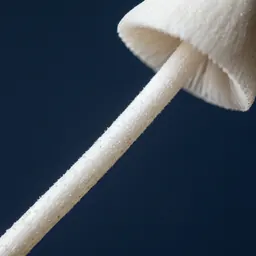 long, brittle
Stem
Stem long, thin, white, brittle, hollow.
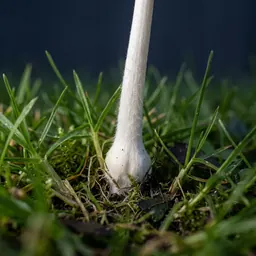 on lawns
Base of the stem
Base slightly swollen; appears on lawns after rain.
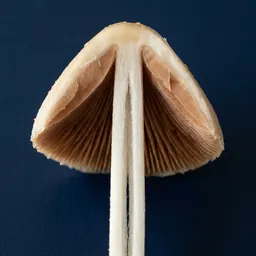 delikatny
Cross-section
Flesh very thin; the mushroom dries out within a day.
The close-ups are AI illustrations. Any doubt is settled by a mycologist or herbalist, not by a photo.
Where and when it grows
Lawns, parks, roadsides, short grass, often after rain. From May to September.
JanFebMarAprMayJunJulAugSepOctNovDec
Most often under: none – lawns, short grass.
Beware of the lookalike
Conocybe rugosa. The wrinkled conocybe is rusty-brown and has a ring; the soft conocybe is very pale, without a ring. Both have rusty gills – do not pick either one.
Good to know
Toxicity is not well studied; there are no edible species among the conecaps (Conocybe), and some contain amanitins, so it is treated as poisonous.
Where in Poland
Most records in the GBIF database: podlaskie, małopolskie, śląskie, wielkopolskie, dolnośląskie.
Frequently asked questions
Is white dunce cap edible?
Nie. This mushroom is poisonous. No reliable data on poisonings; the genus Conocybe includes species with amanitins (symptoms after 6–24 h, liver damage). Any consumption requires medical consultation.
When does white dunce cap grow?
May – September. Lawns, parks, roadsides, short grass, often after rain. From May to September.
White dunce cap: what is it easily confused with?
Most often with the species Conocybe rugosa. The wrinkled conocybe is rusty-brown and has a ring; the soft conocybe is very pale, without a ring. Both have rusty gills – do not pick either one.
Where in Poland does white dunce cap grow?
Most records (GBIF): podlaskie, małopolskie, śląskie, wielkopolskie, dolnośląskie. Most often under: none – lawns, short grass.