

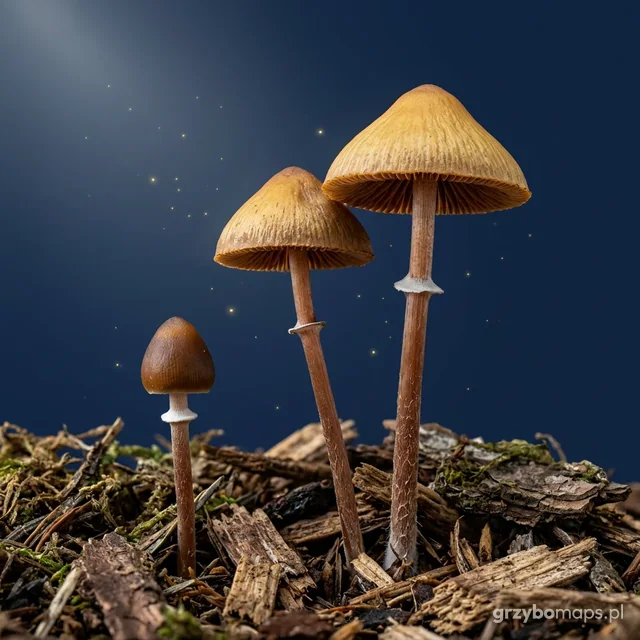
Conocybe rugosa
Conocybe rugosa (syn. Pholiotina rugosa)
Polish folk names: łuskwianka pomarszczona, stożkówka cienkotrzonowa (C. filaris, bardzo bliska lub tożsama)
How to recognise
- Cap up to 3 cm, conical to convex, yellow-brown to rusty brown, striate at the margin.
- Gills dense, whitish at first, later rusty brown; spore print rusty.
- Stem thin (2–5 cm), brittle, with a small horizontal ring that may disappear.
- Grows on lawns, in gardens, on wood chips and leaf litter.
Up close
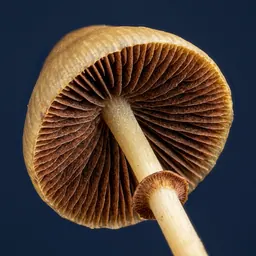 rdzawe blaszki
Underside of the cap
Gills dense, whitish, then rusty-brown.
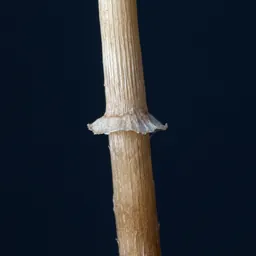 small ring
Stem
Stem thin, brittle, with a small, horizontal ring.
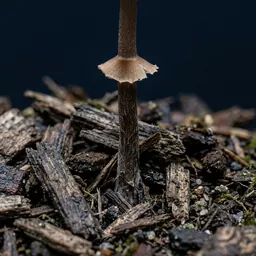 on wood chips
Base of the stem
Grows on lawns, wood chips and leaf litter. Always twist out the whole mushroom.
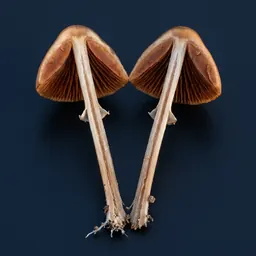 cienki
Cross-section
Flesh thin, brownish. Contains deadly amatoxins.
The close-ups are AI illustrations. Any doubt is settled by a mycologist or herbalist, not by a photo.
Where and when it grows
Lawns, gardens, woodchip beds, roadsides, forests. From spring to autumn, mainly June–October.
JanFebMarAprMayJunJulAugSepOctNovDec
Most often under: none – lawns, wood chips, leaf litter, gardens.
Beware of the lookalike
Liberty cap. Psilocybe has a sharply conical cap with a nipple-like umbo, violet-black gills and no ring; conocybe has rusty-brown gills and spore print and usually a ring.
Where in Poland
Most records in the GBIF database: lubuskie, łódzkie, małopolskie.
Frequently asked questions
Is conocybe rugosa edible?
No. It is a deadly poisonous mushroom. Amanitins (as in the death cap). First symptoms after 6–24 h: vomiting, diarrhoea, abdominal pain; after an apparent improvement, liver and kidney damage, which can lead to death. The toxins are destroyed neither by cooking nor by drying.
When does conocybe rugosa grow?
June – October. Lawns, gardens, woodchip beds, roadsides, forests. From spring to autumn, mainly June–October.
Conocybe rugosa: what is it easily confused with?
Most often with the species Liberty cap. Psilocybe has a sharply conical cap with a nipple-like umbo, violet-black gills and no ring; conocybe has rusty-brown gills and spore print and usually a ring.
Where in Poland does conocybe rugosa grow?
Most records (GBIF): lubuskie, łódzkie, małopolskie. Most often under: none – lawns, wood chips, leaf litter, gardens.