

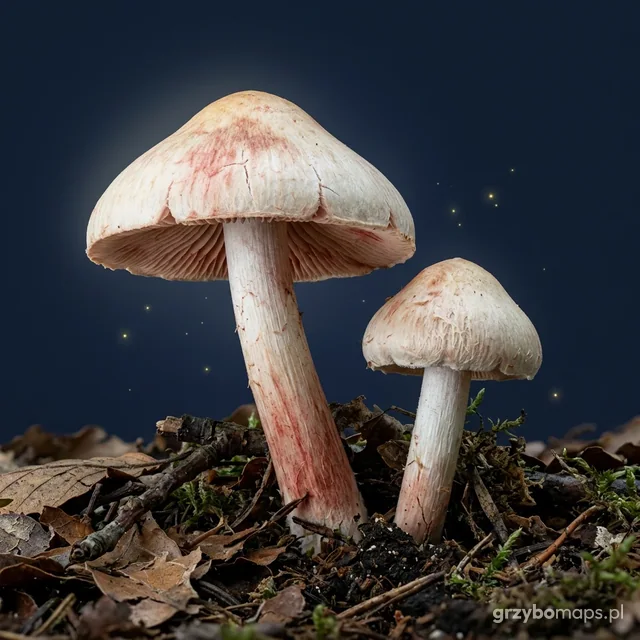
Red-staining inocybe
Inosperma erubescens
Polish folk names: włókniak ceglasty, inocybe
How to recognise
- Cap white or cream, quickly turning brick-coloured
- Gills turn red when pressed
- Flesh in the stem turns strongly pink
Up close
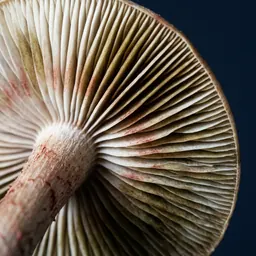 czerwienieje
Underside of the cap
Gills whitish, then olive-brown; turning red under pressure.
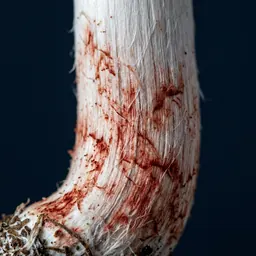 czerwone plamy
Stem
Stem white, fibrous, turning red where touched; no ring.
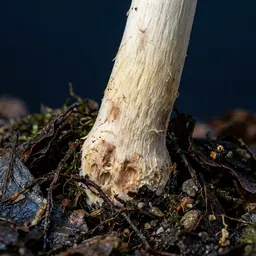 bez pochwy
Base of the stem
Base slightly thickened, without a volva; grows under beeches on limestone. Always twist out the whole mushroom.
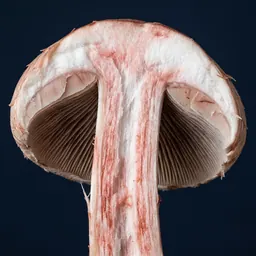 turns pink
Cross-section
Flesh white, in the stem turning strongly pink to red when cut.
The close-ups are AI illustrations. Any doubt is settled by a mycologist or herbalist, not by a photo.
Where and when it grows
Forests, parks and thickets, under beech, oak, linden, sometimes pine. From late May to early October.
JanFebMarAprMayJunJulAugSepOctNovDec
Most often under: beech, oak, linden, less often pine; parks.
Beware of the lookalike
St George's mushroom. The inocybe has a bigger umbo, grows in forests and has a reddish tinge. Do not collect white spring mushrooms with an umbo without a mycologist.
Where in Poland
Most records in the GBIF database: zachodniopomorskie, wielkopolskie, lubuskie, łódzkie, śląskie.
Frequently asked questions
Is red-staining inocybe edible?
No. It is a deadly poisonous mushroom. Muscarine: after 15–30 minutes, salivation, tearing, sweating, diarrhoea, slowed heart rate, drop in blood pressure.
When does red-staining inocybe grow?
May – October. Forests, parks and thickets, under beech, oak, linden, sometimes pine. From late May to early October.
Red-staining inocybe: what is it easily confused with?
Most often with the species St George's mushroom. The inocybe has a bigger umbo, grows in forests and has a reddish tinge. Do not collect white spring mushrooms with an umbo without a mycologist.
Where in Poland does red-staining inocybe grow?
Most records (GBIF): zachodniopomorskie, wielkopolskie, lubuskie, łódzkie, śląskie. Most often under: beech, oak, linden, less often pine; parks.