

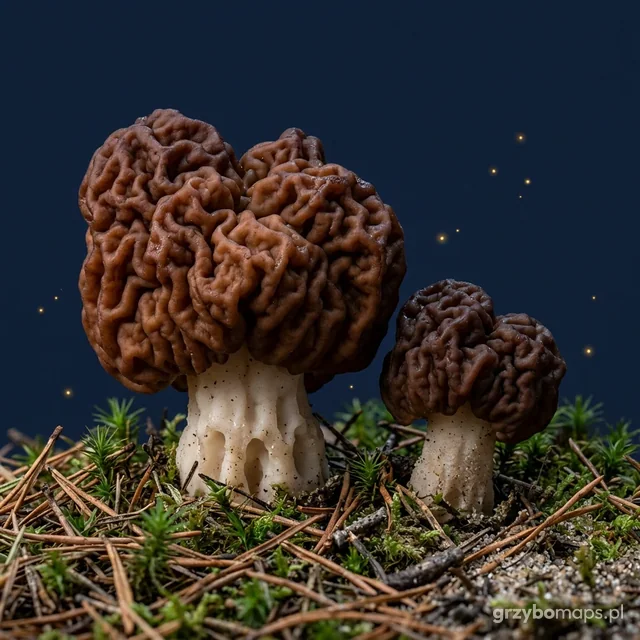
False morel
Gyromitra esculenta
Polish folk names: piestrzenica
How to recognise
- Cap irregular, folded like a brain or a walnut
- Colour from yellow-brown to almost black
- Stem short, whitish
Up close
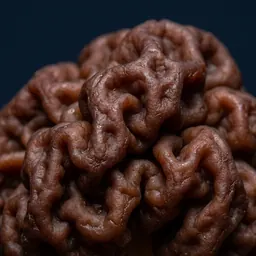 like a brain
Surface
Cap folded like a brain or a walnut – without regular pits as in the morel.
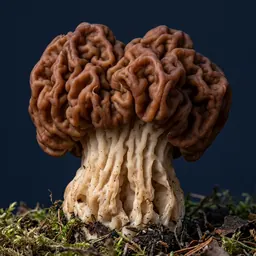 short, white
Stem
Stem short, thick, whitish, irregular, often furrowed.
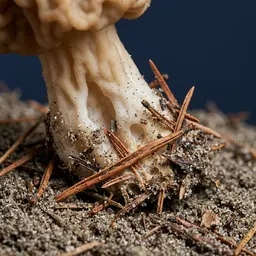 under pine
Base of the stem
Grows in spring on sandy soil under pines. Always twist out the whole mushroom.
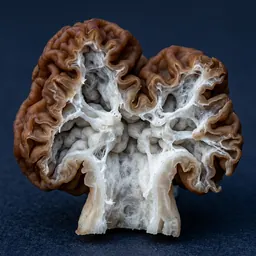 chambers, not a tube
Inside
Inside, numerous chambers and folds – not a single hollow channel as in the morel.
The close-ups are AI illustrations. Any doubt is settled by a mycologist or herbalist, not by a photo.
Where and when it grows
Pine forests, clearcuts, sandy soils. From March to May.
JanFebMarAprMayJunJulAugSepOctNovDec
Most often under: pine forests, clearcuts, sandy soils.
Beware of the lookalike
Common morel. The morel has a honeycomb-like cap and is hollow inside like a tube. The false morel is folded like a brain or a walnut.
Where in Poland
Most records in the GBIF database: zachodniopomorskie, lubelskie, podlaskie, kujawsko-pomorskie, mazowieckie.
Frequently asked questions
Is false morel edible?
No. It is a deadly poisonous mushroom. Gyromitrin damages the liver, the nervous system and blood cells. The fumes from cooking and the water used for cooking are harmful too.
When does false morel grow?
March – May. Pine forests, clearcuts, sandy soils. From March to May.
False morel: what is it easily confused with?
Most often with the species Common morel. The morel has a honeycomb-like cap and is hollow inside like a tube. The false morel is folded like a brain or a walnut.
Where in Poland does false morel grow?
Most records (GBIF): zachodniopomorskie, lubelskie, podlaskie, kujawsko-pomorskie, mazowieckie. Most often under: pine forests, clearcuts, sandy soils.