

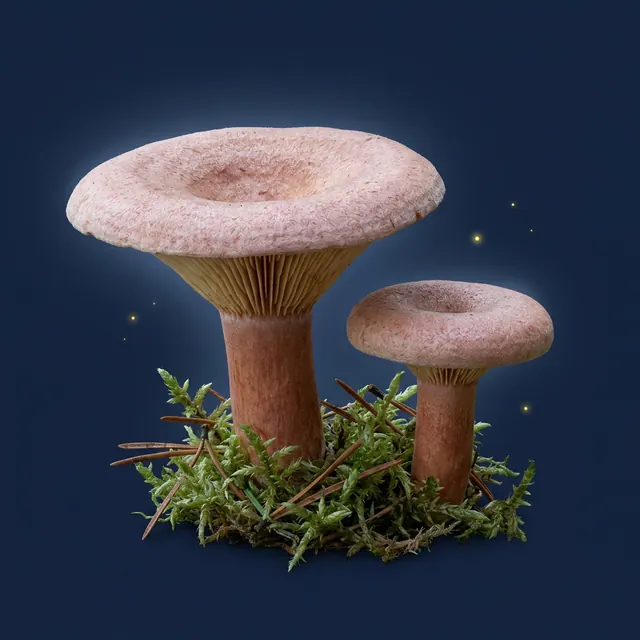
Fenugreek milkcap
Lactarius helvus
How to recognise
- Cap 5–15 cm, flat with a wide depression, dry, matt, ochre-pink or tawny-pink, without banding.
- Gills dense, whitish-yellow, then ochre-yellow.
- Stem 4–13 cm, reddish-ochre, later hollow.
- Milk scanty, almost watery; smell like lovage or Maggi seasoning (sotolon).
Up close
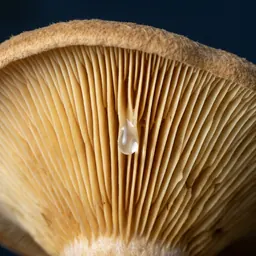 ochrowe blaszki
Underside of the cap
Gills crowded, whitish-yellowish to ochre-yellow, sometimes forked.
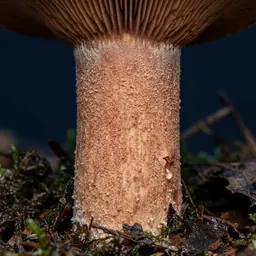 rudawy
Stem
Stem red-ochre, paler than the cap, granular at the top.
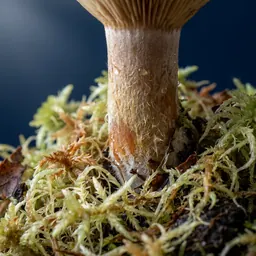 w torfowcach
Base of the stem
Often grows among sphagnum and mosses on acidic soil.
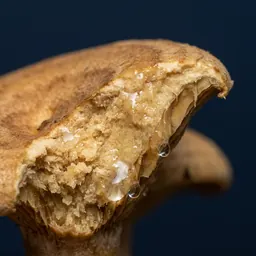 wodniste mleczko
Cross-section
Flesh ochre-rusty, latex scanty and watery; strong smell of lovage.
The close-ups are AI illustrations. Any doubt is settled by a mycologist or herbalist, not by a photo.
Where and when it grows
Coniferous and deciduous forests on acidic soils, peat bogs among sphagnum mosses. From June to October; common in Poland.
JanFebMarAprMayJunJulAugSepOctNovDec
Most often under: spruce, pine, birch (peat bogs, mosses).
Beware of the lookalike
Curry milkcap. The curry milkcap has a similar smell, but is smaller, darker, rusty brown.
Good to know
Dried and ground, it is sometimes used as a spice in small amounts. Eaten in a larger quantity it causes poisoning.
Frequently asked questions
Is fenugreek milkcap edible?
Nie. This mushroom is poisonous. Probably sesquiterpenes. Symptoms usually within 30 minutes: nausea, vomiting, diarrhoea, dizziness, chills. In October 1949, 418 people were poisoned by it near Leipzig.
When does fenugreek milkcap grow?
June – October. Coniferous and deciduous forests on acidic soils, peat bogs among sphagnum mosses. From June to October; common in Poland.
Fenugreek milkcap: what is it easily confused with?
Most often with the species Curry milkcap. The curry milkcap has a similar smell, but is smaller, darker, rusty brown.