

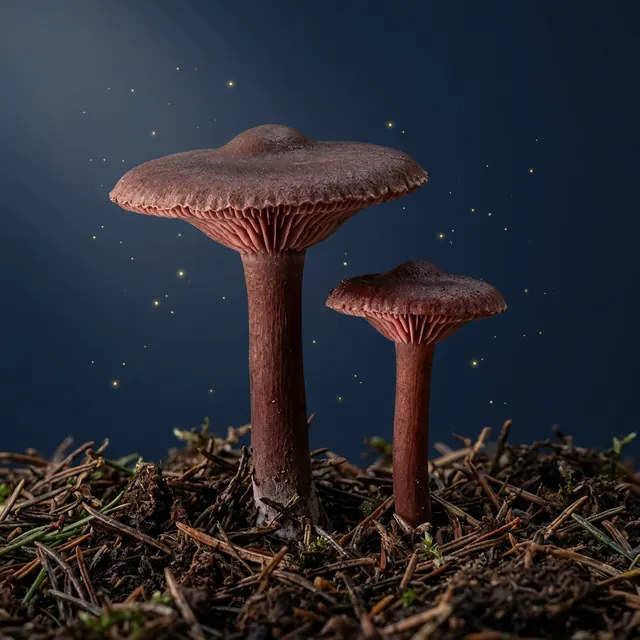
Curry milkcap
Lactarius camphoratus
How to recognise
- Cap 2–5 cm, dark orange-brown to red-brown, matt, with an umbo and a depression around it; margin notched.
- Gills crowded, slightly decurrent, light flesh-reddish, then reddish-brown, brown-spotted when pressed.
- Stem 3–8 cm tall and up to 1 cm thick, dark red-brown, hollow, blackening at the base.
- Milk watery white, mild with a bitterish aftertaste; smell of camphor, when dried of lovage or chicory.
Where and when it grows
Deciduous and coniferous forests, in places rich in humus, near spruces, pines, beeches and oaks. From June to November; common in Poland.
JanFebMarAprMayJunJulAugSepOctNovDec
Most often under: spruce, pine, beech; oak.
Beware of the lookalike
Rufous milkcap. The rufous milkcap is larger, has burning milk and lacks the spicy smell.
In the kitchen
Edible of lower quality. Best dried and ground into mushroom powder, used as a seasoning.
Good to know
Opinions on edibility differ: some sources list it as inedible because of its strong aroma.
Frequently asked questions
Is curry milkcap edible?
Yes, curry milkcap is an edible mushroom.
When does curry milkcap grow?
June – November. Deciduous and coniferous forests, in places rich in humus, near spruces, pines, beeches and oaks. From June to November; common in Poland.
Curry milkcap: what is it easily confused with?
Most often with the species Rufous milkcap. The rufous milkcap is larger, has burning milk and lacks the spicy smell.