


Haymaker
Panaeolina foenisecii
Polish folk names: kołpaczek szorstkozarodnikowy, kołpaczek kośny
How to recognise
- Cap 1–3 cm, bell-shaped to convex, dark brown when moist, fading to beige as it dries, often in bands.
- Gills brown with darker spots, edge paler; spore print dark brown (not black as in Panaeolus).
- Stem thin, brittle, light brown, without a ring.
- Appears in large numbers on mown lawns from spring to autumn.
Up close
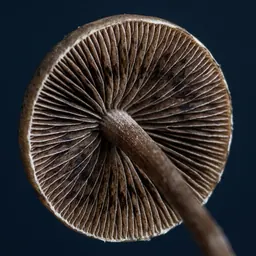 brown spots
Underside of the cap
Gills brown with darker spots, edge paler.
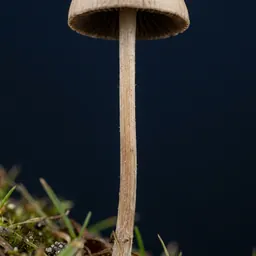 kruchy
Stem
Stem thin, brittle, light brown, without a ring.
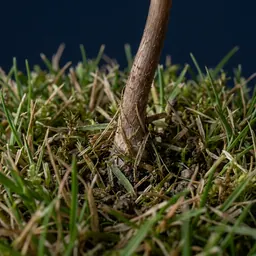 on lawns
Base of the stem
In large numbers on mown lawns.
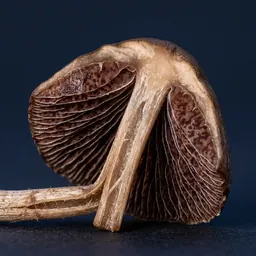 bands on the cap
Cross-section
The cap lightens in bands as it dries; spore print dark brown.
The close-ups are AI illustrations. Any doubt is settled by a mycologist or herbalist, not by a photo.
Where and when it grows
Fertile, mown lawns, meadows, parks and verges; often together with conecaps. From May to October.
JanFebMarAprMayJunJulAugSepOctNovDec
Most often under: none – lawns, meadows, parks.
Beware of the lookalike
Conocybe rugosa. Conocybe has rusty gills and a small ring; the haymaker has dark brown mottled gills, a dark brown spore print and no ring.
Good to know
Does not contain psilocybin (formerly wrongly thought to be hallucinogenic). After accidental ingestion, e.g. by children, there are usually no symptoms or mild, passing stomach complaints.
Where in Poland
Most records in the GBIF database: łódzkie, wielkopolskie, mazowieckie, małopolskie, śląskie.
Frequently asked questions
Is haymaker edible?
Nie. This mushroom is poisonous. Weakly poisonous: mild nausea and diarrhoea possible within a few hours. The danger is that it grows next to deadly poisonous conecaps – symptoms after 6 h or later require urgent help.
When does haymaker grow?
May – October. Fertile, mown lawns, meadows, parks and verges; often together with conecaps. From May to October.
Haymaker: what is it easily confused with?
Most often with the species Conocybe rugosa. Conocybe has rusty gills and a small ring; the haymaker has dark brown mottled gills, a dark brown spore print and no ring.
Where in Poland does haymaker grow?
Most records (GBIF): łódzkie, wielkopolskie, mazowieckie, małopolskie, śląskie. Most often under: none – lawns, meadows, parks.