

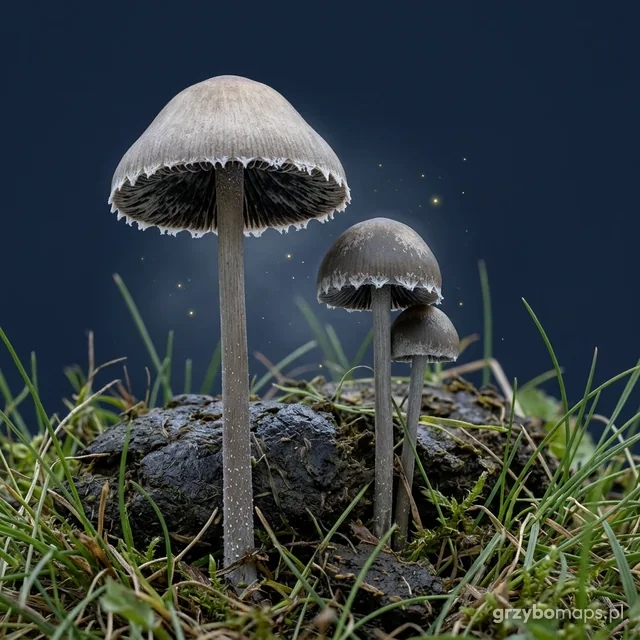
Petticoat mottlegill
Panaeolus papilionaceus
Polish folk names: Panaeolus sphinctrinus, Panaeolus campanulatus
How to recognise
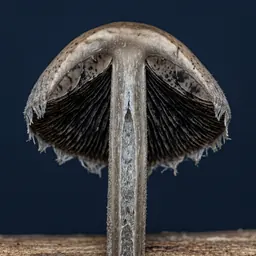
- Cap 1.5–4 cm, bluntly conical to bell-shaped, grey-brown to grey, dry.
- At the edge of the cap white, tooth-like remnants of the veil.
- Gills grey, with black spots, then entirely black with a whitish edge; spore print black.
- Stem thin, long, grey-brown, brittle; grows on dung.
Up close
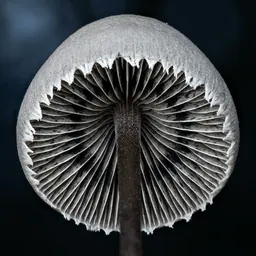 spotted gills
Underside of the cap
Gills grey with black spots, then black with a whitish edge.
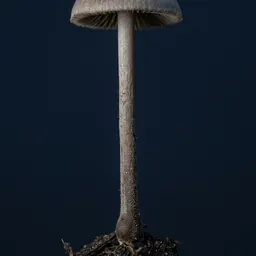 cienki
Stem
Stem thin, long, greyish-brown, brittle.
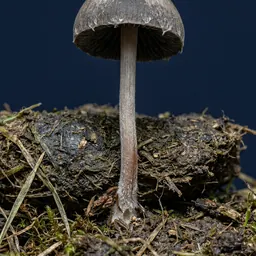 on dung
Base of the stem
Grows on droppings and dung.
 thin flesh
Cross-section
Flesh thin, greyish; cap edge with white teeth.
The close-ups are AI illustrations. Any doubt is settled by a mycologist or herbalist, not by a photo.
Where and when it grows
Pastures, on weathered droppings of herbivores (horse, cow). Rare in Poland, on the Red List. From spring to autumn.
JanFebMarAprMayJunJulAugSepOctNovDec
Most often under: none – horse and cow dung, pastures.
Beware of the lookalike
Conocybe rugosa. Conocybes have rusty gills and spore print; the mottlegill has black, mottled gills with a white edge and a black spore print.
Law
The species is not named in the regulations; if it contains psilocybin, the provisions of the Act on Counteracting Drug Addiction (group I-P) apply.
Where in Poland
Most records in the GBIF database: małopolskie, podlaskie, łódzkie, wielkopolskie, pomorskie.
Frequently asked questions
Is petticoat mottlegill edible?
Nie. This mushroom is poisonous. Psilocybin content low or absent (usually not detected in European studies). Nausea and mild psychological symptoms are possible; confusion with poisonous species is more dangerous.
When does petticoat mottlegill grow?
May – October. Pastures, on weathered droppings of herbivores (horse, cow). Rare in Poland, on the Red List. From spring to autumn.
Petticoat mottlegill: what is it easily confused with?
Most often with the species Conocybe rugosa. Conocybes have rusty gills and spore print; the mottlegill has black, mottled gills with a white edge and a black spore print.
Where in Poland does petticoat mottlegill grow?
Most records (GBIF): małopolskie, podlaskie, łódzkie, wielkopolskie, pomorskie. Most often under: none – horse and cow dung, pastures.