

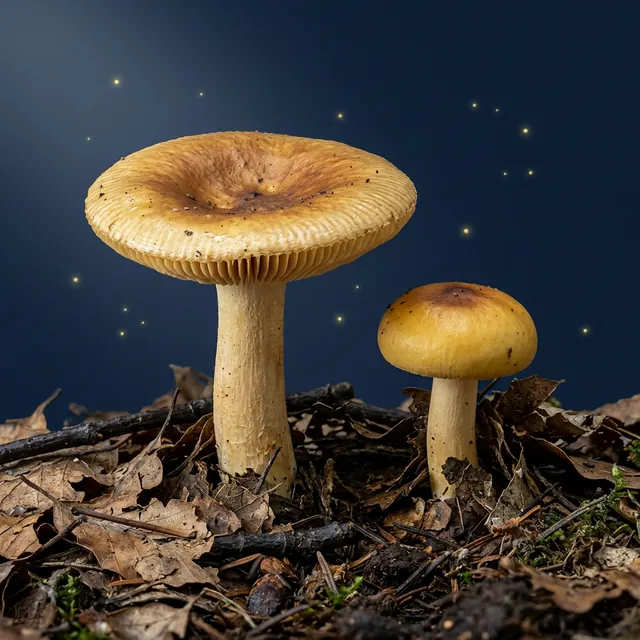
Geranium brittlegill
Russula fellea
Polish folk names: serojeszka skórkowato-żółta
How to recognise
- Cap 5–8 cm, matt, straw-yellow to honey-brownish, darker in the centre; rusty-brown spots after pressure.
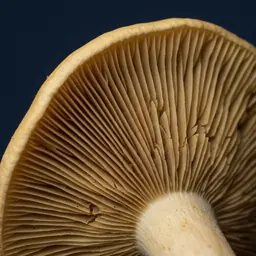
- Gills dense, whitish, then pale ochre, similar in colour to the cap margin.
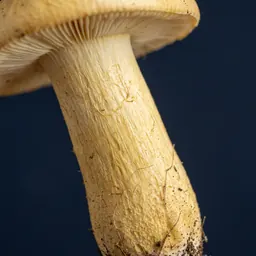
- Stem 3–7 cm, up to 2 cm thick, slightly paler than the cap.
- Flesh brittle, white to straw-ochre; taste very acrid, smell of pelargonium, mustard or fruit.
Up close
 ochrowe blaszki
Underside of the cap
Gills whitish to pale ochre, almost the colour of the cap edge.
 straw-coloured
Stem
Stem straw-yellow, slightly paler than the cap, not white.
 maczugowata
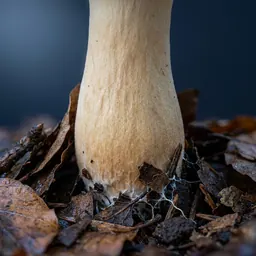
Base of the stem
Stem club-shaped in the lower part, in beech forest among leaves.
 pelargonia
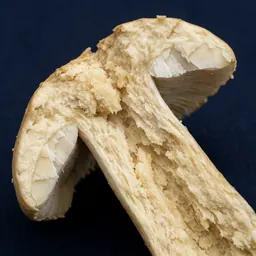
Cross-section
Flesh straw-coloured, smells of pelargonium; taste unbearably burning.
The close-ups are AI illustrations. Any doubt is settled by a mycologist or herbalist, not by a photo.
Where and when it grows
Deciduous and coniferous forests, most often beech woods, also under oaks and spruces. From August to November; common in Poland.
JanFebMarAprMayJunJulAugSepOctNovDec
Most often under: beech, oak, spruce.
Beware of the lookalike
Common yellow russula. Brudnożółty is larger, has gills clearly paler than the cap, does not smell of pelargonium and is not as burning.
Frequently asked questions
Is geranium brittlegill edible?
Nie. This mushroom is poisonous. Acrid substances that irritate the digestive tract. Gastrointestinal symptoms: vomiting, diarrhoea, abdominal pain.
When does geranium brittlegill grow?
August – November. Deciduous and coniferous forests, most often beech woods, also under oaks and spruces. From August to November; common in Poland.
Geranium brittlegill: what is it easily confused with?
Most often with the species Common yellow russula. Brudnożółty is larger, has gills clearly paler than the cap, does not smell of pelargonium and is not as burning.