

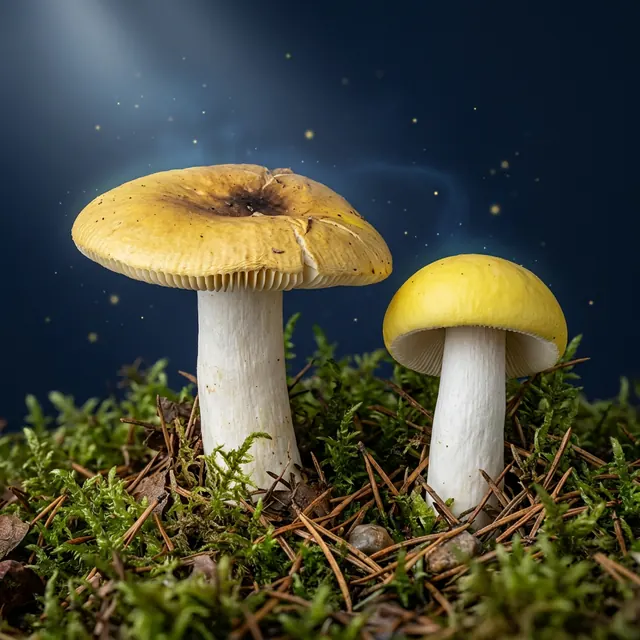
Common yellow russula
Russula ochroleuca
How to recognise
- Cap 4–8 (10) cm, yellowish-ochre to lemon, smooth, sticky in damp weather.
- Gills brittle, white, then pale cream, with ochre spots in places.
- Stem 5.5–7 cm tall and 1.5–2 cm thick, white, sometimes with ochre spots.
- Flesh white, turning grey near the stem; taste mild or tolerably acrid, smell very faint.
Up close
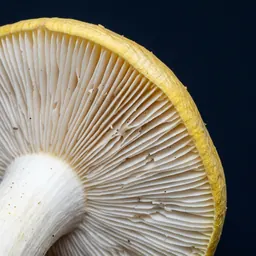 white gills
Underside of the cap
Gills white to pale cream, clearly paler than the yellow edge of the cap.
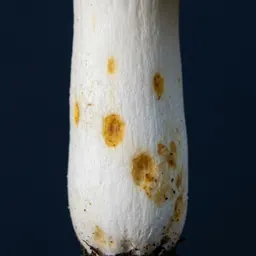 white
Stem
Stem cylindrical, white, smooth, never entirely ochre.
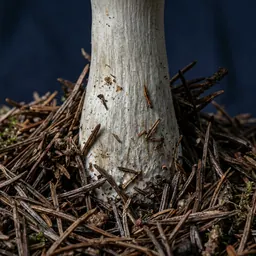 szarzeje
Base of the stem
At the base of the stem the flesh turns grey with time. No ring.
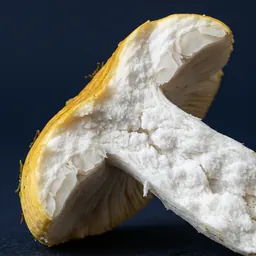 white flesh
Cross-section
Flesh white, fairly soft; taste from mild to slightly acrid.
The close-ups are AI illustrations. Any doubt is settled by a mycologist or herbalist, not by a photo.
Where and when it grows
Coniferous and mixed forests, most often under spruces, less often under pines and beeches. In summer and autumn, also in drought; very common in Poland.
JanFebMarAprMayJunJulAugSepOctNovDec
Most often under: spruce, less often pine and beech.
Beware of the lookalike
Geranium brittlegill. The geranium brittlegill is honey-yellow, smells of pelargonium and is very burning. Its gills are close to the colour of the cap margin; in Gołąbek brudnożółty they are clearly paler.
Good to know
Usually considered inedible. Specimens with a mild taste are sometimes eaten as an admixture; acrid ones turn bitter once cooked.
Frequently asked questions
Is common yellow russula edible?
No, common yellow russula is inedible. Usually considered inedible. Specimens with a mild taste are sometimes eaten as an admixture; acrid ones turn bitter once cooked.
When does common yellow russula grow?
July – October. Coniferous and mixed forests, most often under spruces, less often under pines and beeches. In summer and autumn, also in drought; very common in Poland.
Common yellow russula: what is it easily confused with?
Most often with the species Geranium brittlegill. The geranium brittlegill is honey-yellow, smells of pelargonium and is very burning. Its gills are close to the colour of the cap margin; in Gołąbek brudnożółty they are clearly paler.