

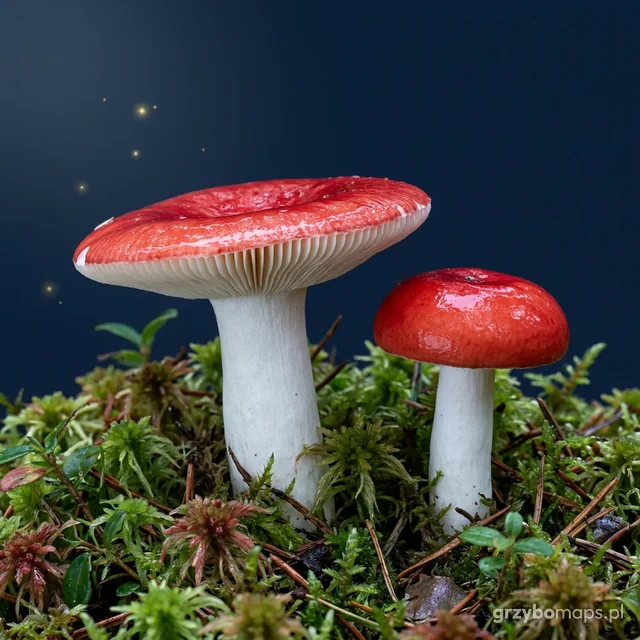
The sickener
Russula emetica
Polish folk names: gorzkówka, psi gołąbek
How to recognise
- Cap bright red, smooth, shiny especially in wet weather; the skin peels off easily.
- Gills and stem pure white, without a ring.
- Flesh white, very brittle, pinkish under the skin.
- Taste very sharp, burning – even a small bite burns the tongue.
Up close
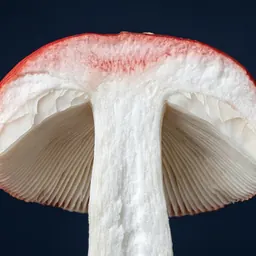
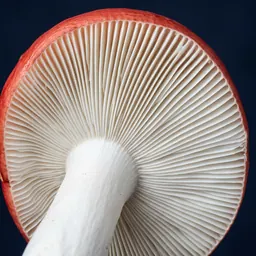 white gills
Underside of the cap
Gills pure white, brittle.
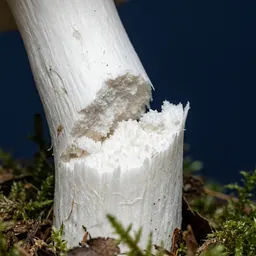 white
Stem
Stem pure white, without a ring.
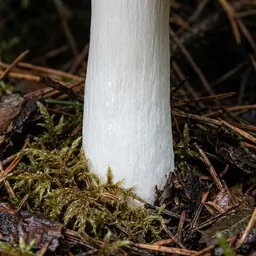 bez pochwy
Base of the stem
Base without a volva; grows in damp pine forests, in moss.
 ostry
Cross-section
Flesh white, very brittle, pinkish under the skin; taste very acrid.
The close-ups are AI illustrations. Any doubt is settled by a mycologist or herbalist, not by a photo.
Where and when it grows
Damp coniferous and mixed forests, often in moss and on peat bogs, under pines and spruces; from July to October.
JanFebMarAprMayJunJulAugSepOctNovDec
Most often under: pine, spruce.
Beware of the lookalike
Bare-toothed russula. The bare-toothed russula is matte, flesh-pink and mild. The sickener is bright red, glossy, brittle and burns the tongue.
Feature-by-feature comparison: Russula paludosa or The sickener?
Where in Poland
Most records in the GBIF database: zachodniopomorskie, wielkopolskie, łódzkie, śląskie, dolnośląskie.
Frequently asked questions
Is the sickener edible?
Nie. This mushroom is poisonous. Substances that irritate the digestive tract (gastroenteric poisoning). After 0.5–3 hours abdominal pain, nausea, vomiting and diarrhoea; usually passes within a day, dangerous mainly because of dehydration.
When does the sickener grow?
July – October. Damp coniferous and mixed forests, often in moss and on peat bogs, under pines and spruces; from July to October.
The sickener: what is it easily confused with?
Most often with the species Bare-toothed russula. The bare-toothed russula is matte, flesh-pink and mild. The sickener is bright red, glossy, brittle and burns the tongue.
Where in Poland does the sickener grow?
Most records (GBIF): zachodniopomorskie, wielkopolskie, łódzkie, śląskie, dolnośląskie. Most often under: pine, spruce.