

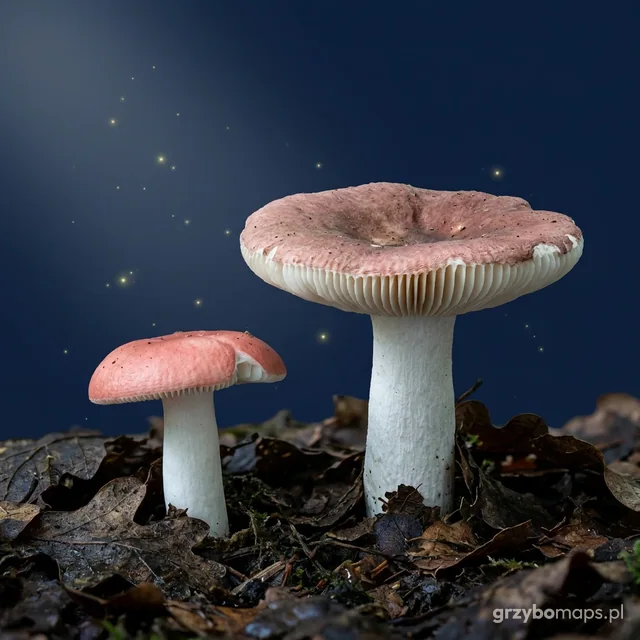
Bare-toothed russula
Russula vesca
How to recognise
- Cap 5–10 cm, flesh-pink to brownish-red, often with paler patches, matt.
- The cap skin is shorter than the flesh – at the edge you can see a narrow white strip and the "teeth" of the gills.
- Gills white, dense; stem white, hard, without a ring.
- Flesh hard, white, taste mild, nutty.
Up close
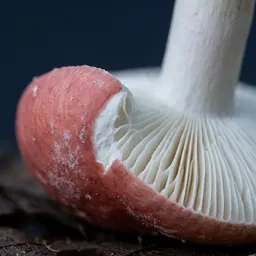 gill teeth
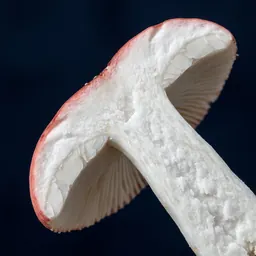
Underside of the cap
Gills white, dense; at the edge the skin is shorter – the teeth of the gills are visible.
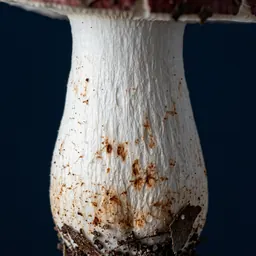 white
Stem
Stem white, hard, without a ring.
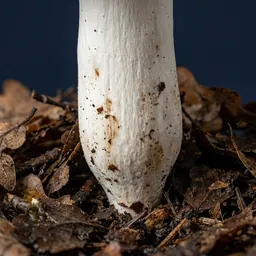 bez pochwy
Base of the stem
Base without a volva and bulb.
 twardy
Cross-section
Flesh hard, white, brittle.
The close-ups are AI illustrations. Any doubt is settled by a mycologist or herbalist, not by a photo.
Where and when it grows
Deciduous and coniferous forests throughout Poland, very common; from June to October.
JanFebMarAprMayJunJulAugSepOctNovDec
Most often under: oak, beech, pine, spruce.
Beware of the lookalike
The sickener. The sickener is bright red, shiny and has a very sharp, burning taste. The bare-toothed russula is matte, flesh-pink, with a mild nutty taste.
In the kitchen
Good for soups, stewing and frying; it has firm flesh and a mild nutty flavour.
Good to know
With brittlegills, taste decides edibility: you can chew a little bit of the cap and spit it out – a burning, sharp taste means an inedible or poisonous species.
Where in Poland
Most records in the GBIF database: wielkopolskie, zachodniopomorskie, łódzkie, śląskie, lubuskie.
Frequently asked questions
Is bare-toothed russula edible?
Yes, bare-toothed russula is an edible mushroom.
When does bare-toothed russula grow?
June – October. Deciduous and coniferous forests throughout Poland, very common; from June to October.
Bare-toothed russula: what is it easily confused with?
Most often with the species The sickener. The sickener is bright red, shiny and has a very sharp, burning taste. The bare-toothed russula is matte, flesh-pink, with a mild nutty taste.
Where in Poland does bare-toothed russula grow?
Most records (GBIF): wielkopolskie, zachodniopomorskie, łódzkie, śląskie, lubuskie. Most often under: oak, beech, pine, spruce.