

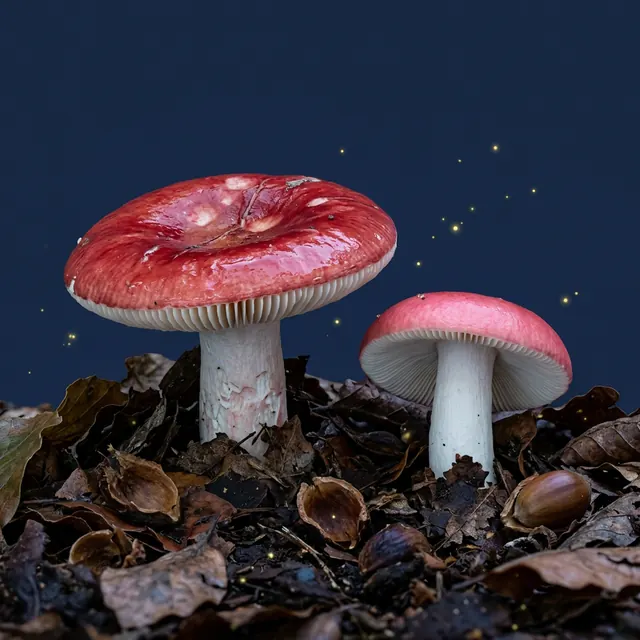
Beechwood sickener
Russula nobilis (syn. Russula mairei)
Polish folk names: gołąbek buczynolubny, gołąbek merowski
How to recognise
- Cap 4–9.5 cm, smooth, pink to carmine, fading to dirty yellowish after rain.
- Gills fairly dense, white or with a yellowish tint.
- Stem 2.5–4 cm tall and 1–1.5 cm thick, white, solid, without pink colouring.
- Flesh firm, white, pink under the skin; smell slightly fruity, taste acrid.
Up close
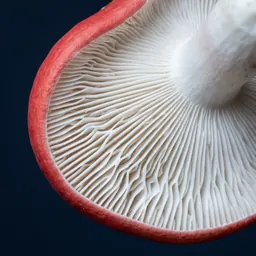 white gills
Underside of the cap
Gills white or with a yellowish tinge, forked.
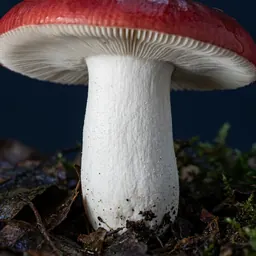 white, short
Stem
Short, solid, white stem without a pink bloom.
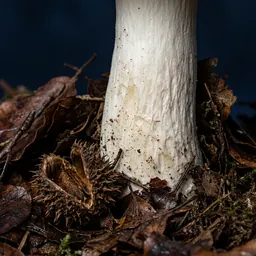 pod bukiem
Base of the stem
Grows in beech litter, on calcareous soil.
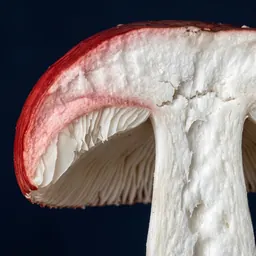 hard flesh
Cross-section
Flesh hard, white, pink under the skin; taste acrid.
The close-ups are AI illustrations. Any doubt is settled by a mycologist or herbalist, not by a photo.
Where and when it grows
Deciduous forests under beeches, on dry limestone soils. From August to October; at many sites in Poland.
JanFebMarAprMayJunJulAugSepOctNovDec
Most often under: buk.
Beware of the lookalike
The sickener. Both have a red cap, white gills and an acrid taste; the beechwood sickener grows under beeches, and only a microscope reliably tells them apart. Both are poisonous.
Frequently asked questions
Is beechwood sickener edible?
Nie. This mushroom is poisonous. Acrid irritants. Gastrointestinal symptoms: diarrhoea, vomiting, colicky abdominal pain.
When does beechwood sickener grow?
August – October. Deciduous forests under beeches, on dry limestone soils. From August to October; at many sites in Poland.
Beechwood sickener: what is it easily confused with?
Most often with the species The sickener. Both have a red cap, white gills and an acrid taste; the beechwood sickener grows under beeches, and only a microscope reliably tells them apart. Both are poisonous.