

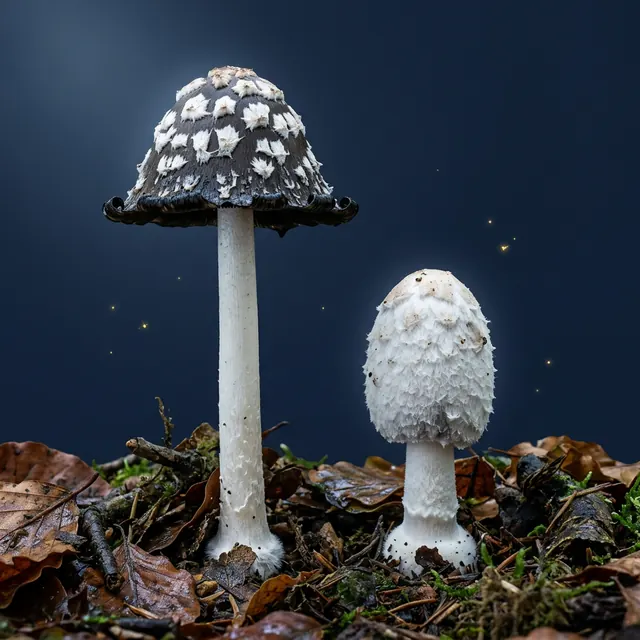
Magpie inkcap
Coprinopsis picacea
Polish folk names: czernidłak pstry
How to recognise
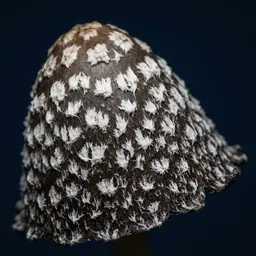
- Cap 3–7 cm in diameter and 7–12 cm tall, egg-shaped, then bell-shaped, dark greyish-brown with silvery-white patches.
- Gills crowded, white, then reddish, finally black and deliquescing.
- Stem 10–20 cm, 0.7–1.5 cm thick, white, flaky, hollow, with a bulbous base.
- Spore print black; the smell can be unpleasant, like mothballs.
Up close
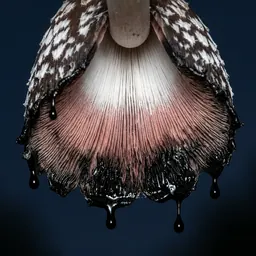 blackening gills
Underside of the cap
Gills crowded, white, then reddish, finally black and dissolving into a black liquid.
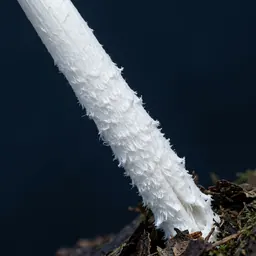 tall, white
Stem
Stem very tall, white, flocculose, hollow, without a ring.
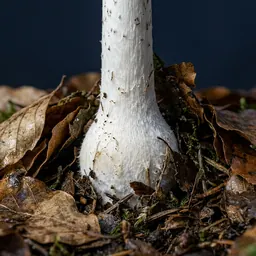 bulwiasta
Base of the stem
Base swollen into a bulb, in beech litter.
 pstry kapelusz
Cross-section
Dark cap with white patches like magpie plumage; flesh thin, whitish.
The close-ups are AI illustrations. Any doubt is settled by a mycologist or herbalist, not by a photo.
Where and when it grows
Among fallen leaves in forests, especially beech forests, less often under oaks and hornbeams, on calcium-rich soils. From August to October, sometimes in November.
JanFebMarAprMayJunJulAugSepOctNovDec
Most often under: beech; less often oak and hornbeam.
Beware of the lookalike
Shaggy ink cap. The shaggy ink cap has a white cap with spreading scales and grows in meadows and by roadsides. The magpie inkcap has a dark cap with white patches and grows in the forest.
Good to know
Rare in Poland, on the Red List of Fungi of Poland with status V (vulnerable).
Frequently asked questions
Is magpie inkcap edible?
Nie. This mushroom is poisonous. Causes gastrointestinal complaints; considered poisonous for some people. The toxin has not been described.
When does magpie inkcap grow?
August – November. Among fallen leaves in forests, especially beech forests, less often under oaks and hornbeams, on calcium-rich soils. From August to October, sometimes in November.
Magpie inkcap: what is it easily confused with?
Most often with the species Shaggy ink cap. The shaggy ink cap has a white cap with spreading scales and grows in meadows and by roadsides. The magpie inkcap has a dark cap with white patches and grows in the forest.