

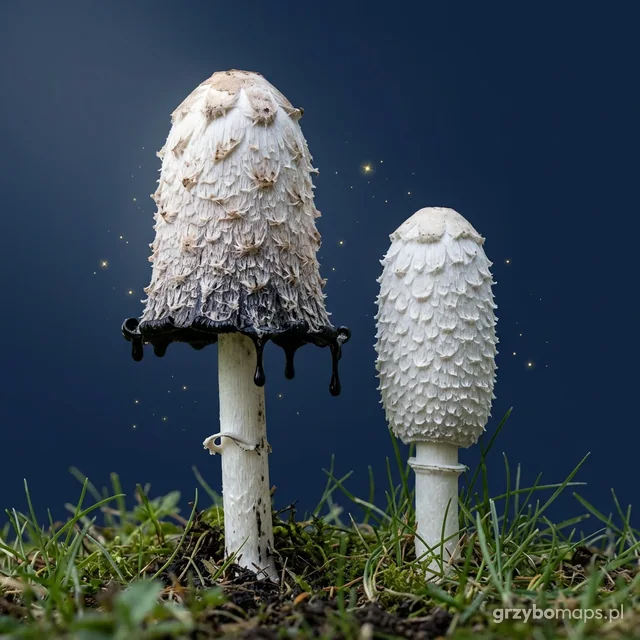
Shaggy ink cap
Coprinus comatus
Polish folk names: czernidłak
How to recognise
- Tall, cylindrical, white cap with scales
- The edge turns black and dissolves within a few hours
- Edible only when very young
Up close
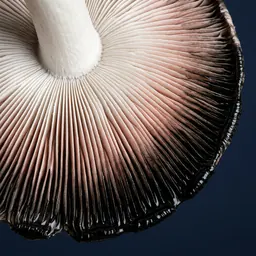 gills turn black
Underside of the cap
Gills white, then pink, turning black from the edge and dissolving into ink.
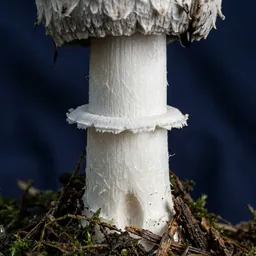 ring
Stem
White, hollow stem with a narrow, movable ring.
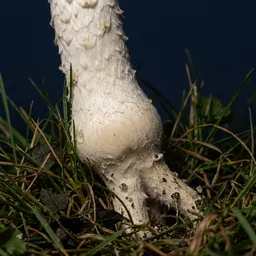 swollen
Base of the stem
Base slightly swollen, rooting; grows by roadsides, in meadows and on lawns.
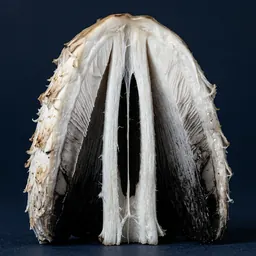 pusty trzon
Cross-section
Flesh white, thin; stem hollow with a thread in the middle.
The close-ups are AI illustrations. Any doubt is settled by a mycologist or herbalist, not by a photo.
Where and when it grows
Lawns, gardens, meadows, pastures, riverbanks. From April to November.
JanFebMarAprMayJunJulAugSepOctNovDec
Most often under: lawns, meadows, gardens, roadsides.
Beware of the lookalike
Common ink cap. The common ink cap is grey, smoother and grows in clumps near stumps. It is poisonous with alcohol.
Feature-by-feature comparison: Shaggy ink cap or Common ink cap?
In the kitchen
Only young, closed, white caps. Prepare right away, because within a few hours it turns black.
Where in Poland
Most records in the GBIF database: mazowieckie, pomorskie, wielkopolskie, śląskie, małopolskie.
Frequently asked questions
Is shaggy ink cap edible?
Warunkowo. It requires proper preparation.
When does shaggy ink cap grow?
April – November. Lawns, gardens, meadows, pastures, riverbanks. From April to November.
Shaggy ink cap: what is it easily confused with?
Most often with the species Common ink cap. The common ink cap is grey, smoother and grows in clumps near stumps. It is poisonous with alcohol.
Where in Poland does shaggy ink cap grow?
Most records (GBIF): mazowieckie, pomorskie, wielkopolskie, śląskie, małopolskie. Most often under: lawns, meadows, gardens, roadsides.