

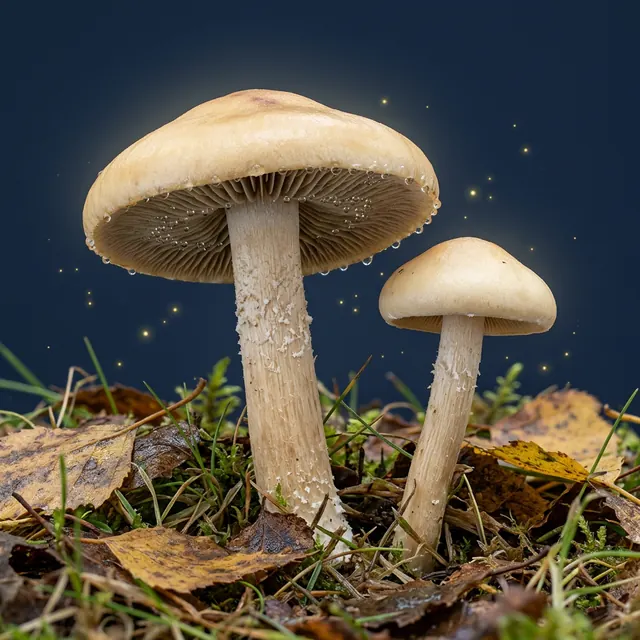
Poison pie
Hebeloma crustuliniforme
Polish folk names: skórzak rosisty
How to recognise
- Cap 4–8 cm, exceptionally 10 cm, cream, ochre or rust-yellow, smooth, slimy when damp.
- Gills crowded, grey-ochre, with fringed edges; in damp weather they exude drops of liquid on the edges.
- Stem 5–10 cm tall and 1–2 cm thick, fibrous, with fine scales at the top, no ring.
- Flesh cream-white, smell of radish, taste usually bitter; spore print ochre-brown.
Up close
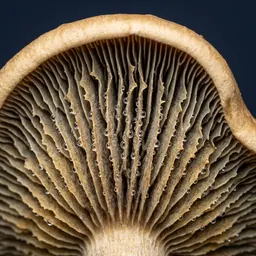 weeping gills
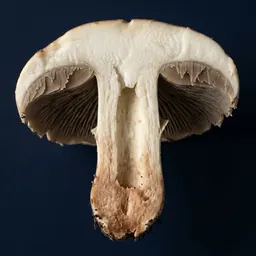
Underside of the cap
Gills grey-ochre, crowded; in damp weather drops of liquid hang on the edges.
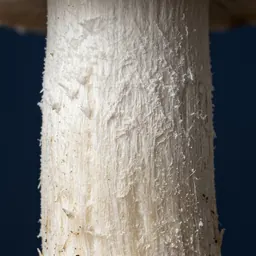 scales at the top
Stem
Stem pale, fibrous, with small white scales in the upper part. No ring.
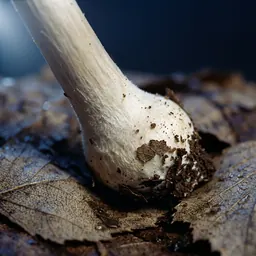 slightly thickened
Base of the stem
Base slightly wider, without a volva, in litter or grass.
 zapach rzodkwi
Cross-section
Flesh creamy-white, darker in the lower stem. Smells of radish, tastes bitter. Poisonous mushroom.
The close-ups are AI illustrations. Any doubt is settled by a mycologist or herbalist, not by a photo.
Where and when it grows
Deciduous and coniferous forests, parks, gardens, embankments, roadsides; under birch, oak and beech. From May to November; very common in Poland.
JanFebMarAprMayJunJulAugSepOctNovDec
Most often under: birch, oak, beech; parks, gardens, roadsides.
Beware of the lookalike
Włośnianka musztardowa. Włośnianka musztardowa is larger and more massive, has reddish tones on the cap, and its gills do not exude droplets. Neither is suitable for eating.
Frequently asked questions
Is poison pie edible?
Nie. This mushroom is poisonous. Causes gastrointestinal disturbances: vomiting, diarrhoea and colicky abdominal pain a few hours after eating, from mild to severe. Young, non-bitter fruiting bodies are harmful too.
When does poison pie grow?
May – November. Deciduous and coniferous forests, parks, gardens, embankments, roadsides; under birch, oak and beech. From May to November; very common in Poland.
Poison pie: what is it easily confused with?
Most often with the species Włośnianka musztardowa. Włośnianka musztardowa is larger and more massive, has reddish tones on the cap, and its gills do not exude droplets. Neither is suitable for eating.