

Hare's ear
Otidea onotica
Polish folk names: uszka, ośle ucho
How to recognise
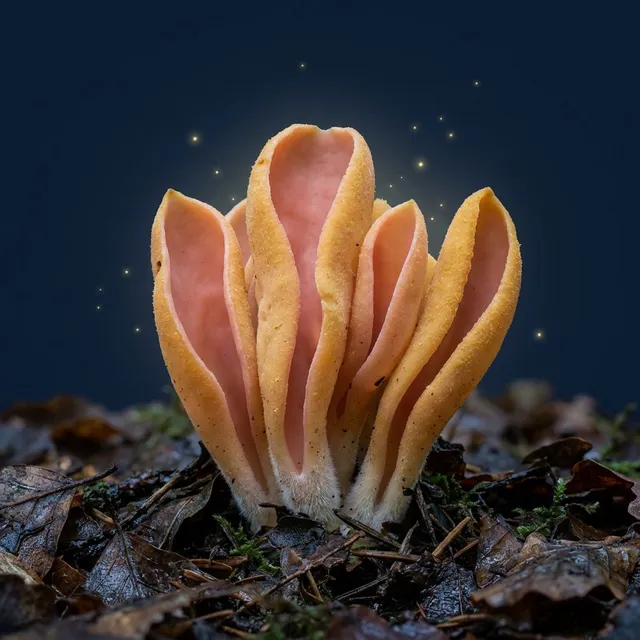
- Fruiting body 3–10 cm tall, elongated like a donkey's ear, split down one side to the base.
- Inside yellow-orange with a pinkish tinge, smooth.
- Outer side ochre-yellow, lightly dusted.
- A short stalk with white hairs at the base.
Where and when it grows
On the ground in deciduous and mixed forests, especially under beech and oak. From summer to autumn.
JanFebMarAprMayJunJulAugSepOctNovDec
Most often under: broadleaf and mixed forests, beech, oak.
Beware of the lookalike
Blistered cup. The blistered cup forms closed, pale brown cups on manure. The hare's ear is upright, slit on one side and grows in the forest.
Good to know
Inedible. Sometimes described as edible, but it probably contains monomethylhydrazine, the same toxin as the false morel, and the genus is hard to identify without a microscope.
Frequently asked questions
Is hare's ear edible?
No, hare's ear is inedible. Inedible. Sometimes described as edible, but it probably contains monomethylhydrazine, the same toxin as the false morel, and the genus is hard to identify without a microscope.
When does hare's ear grow?
July – October. On the ground in deciduous and mixed forests, especially under beech and oak. From summer to autumn.
Hare's ear: what is it easily confused with?
Most often with the species Blistered cup. The blistered cup forms closed, pale brown cups on manure. The hare's ear is upright, slit on one side and grows in the forest.